New Delhi: At 35,000 feet above the ground, time seems to slow down—but so does the body. Hours spent in a confined seat can leave even the most seasoned traveller feeling stiff, fatigued, and mentally drained. Addressing this modern travel challenge, a simple yet powerful solution is taking flight: Yoga for Air Travel—a thoughtfully designed 5-minute in-flight wellness protocol.
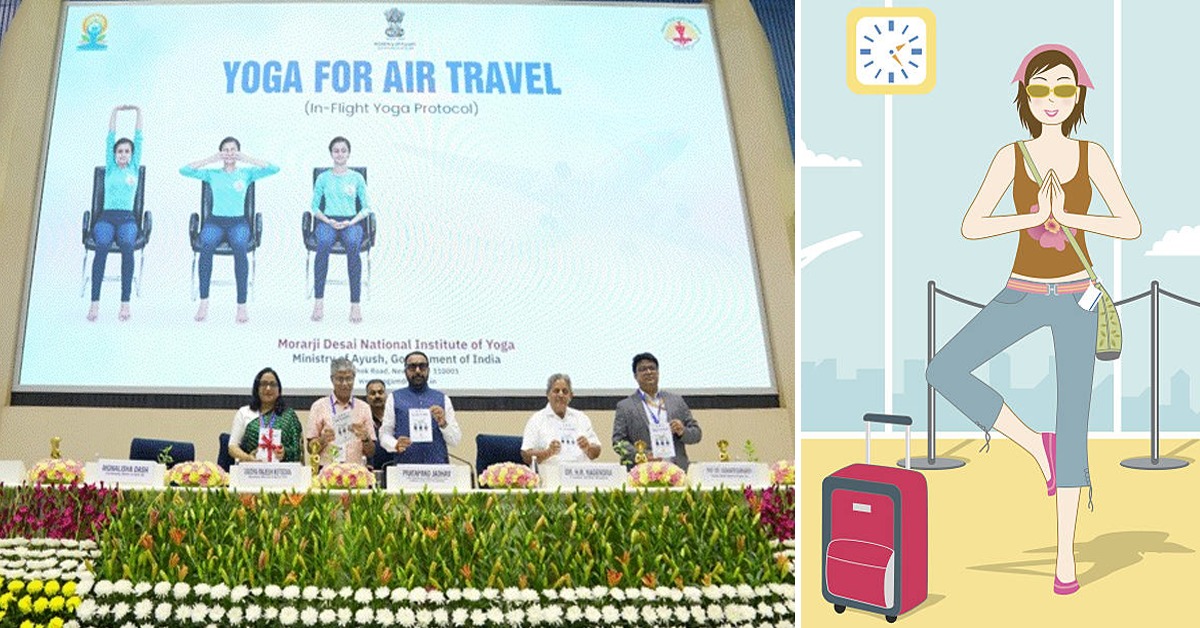
Launched during Yoga Mahotsav 2026 by Shri Prataprao Jadhav, Hon’ble Union Minister of State (Independent Charge) for Ayush, this innovative initiative brings the timeless knowledge of yoga into the cabin, transforming your seat into a space for rejuvenation. Developed by the Morarji Desai National Institute of Yoga, the protocol is tailored for today’s frequent flyers—offering a quick, safe, and effective way to stay refreshed mid-air.
Highlighting the vision behind the initiative, Shri Prataprao Jadhav, Hon’ble Union Minister of State (Independent Charge) for Ayush, informed, “Yoga is a powerful tool for preventive health and well-being. This in-flight yoga protocol reflects our commitment to making yoga accessible in every setting—even at 35,000 feet—so that individuals can stay active, relaxed, and balanced during travel.”
Why In-Flight Yoga Matters?
Air travel, particularly long-haul journeys, often leads to prolonged immobility. This can result in muscle stiffness, poor circulation, fatigue, jet lag, and, in some cases, more serious concerns such as deep vein thrombosis (DVT). Coupled with travel-related stress and cabin pressure changes, the need for a simple wellness intervention becomes evident.
The 5-minute Yoga protocol addresses these challenges through gentle movements, mindful breathing, and short meditation, helping restore balance in both body and mind.
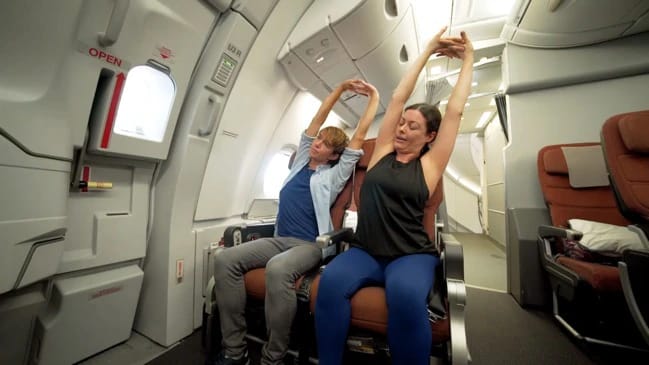
A Wellness Routine at Your Seat
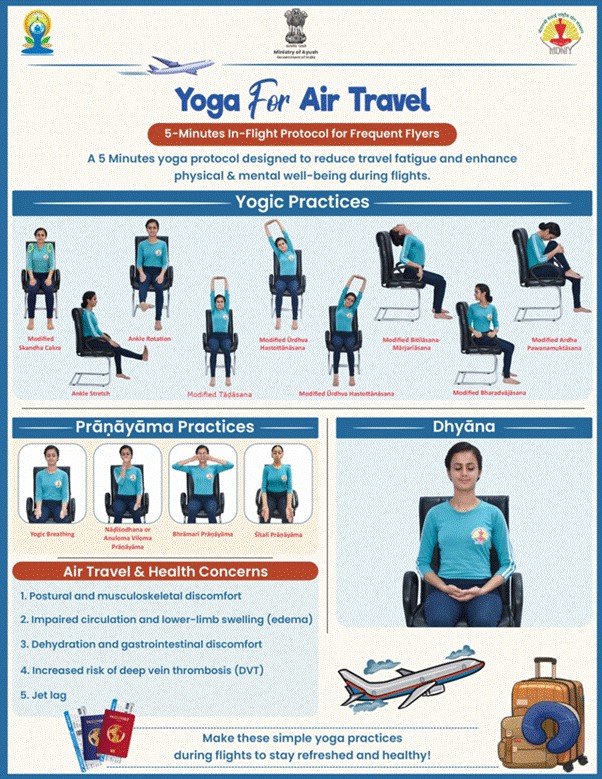
Designed for ease and accessibility, the protocol requires no special equipment and can be performed while seated. It seamlessly blends physical movement with breath awareness and mental relaxation:
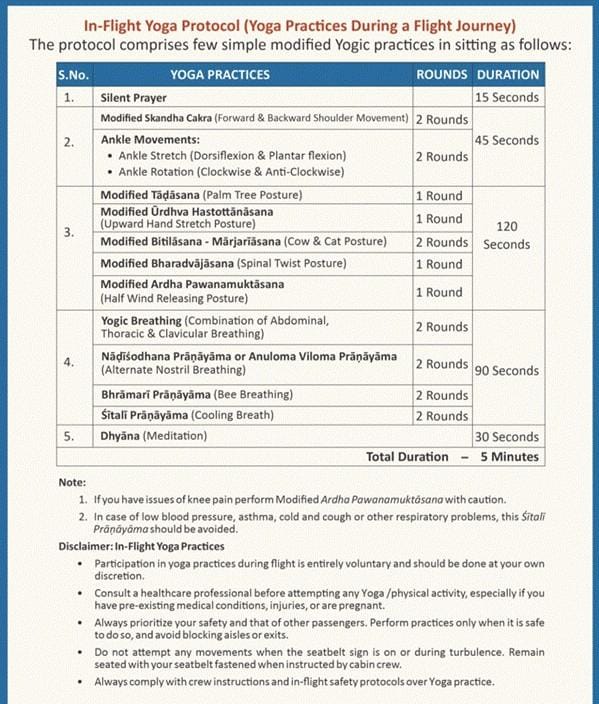
1) Centring (15 seconds): Begin with a moment of silent awareness or intention to ground yourself.
2) Gentle Joint Movements (45 seconds): Shoulder rotations, ankle stretches, and simple movements to improve circulation and reduce stiffness.
3) Seated Yoga Postures: Modified asanas such as Tadasana (Palm Tree Pose), seated Cat-Cow, spinal twists, and gentle leg movements to release tension and improve posture.
4) Pranayama (Breathing Practices): Deep breathing, Anulom Vilom, Bhramari, and Sheetali to calm the nervous system and enhance oxygen flow.
5) Meditation (30 seconds): A brief pause to reset the mind and promote relaxation.