

New Delhi: For millions of Indian families, owning a home represents stability, security, and a lifetime investment. As India’s cities grow and urban aspirations expand, housing has become central to social wellbeing and economic progress, supporting employment and activity across construction, infrastructure, and allied sectors.
Home ownership is seen both as a personal milestone and a foundation for inclusive infrastructure development. Over the years, steady policy attention has strengthened housing supply in the affordable and mid-income segments, with a large number of projects coming up in towns and cities across the country. Many of these projects get stalled due to financial and other constraints.
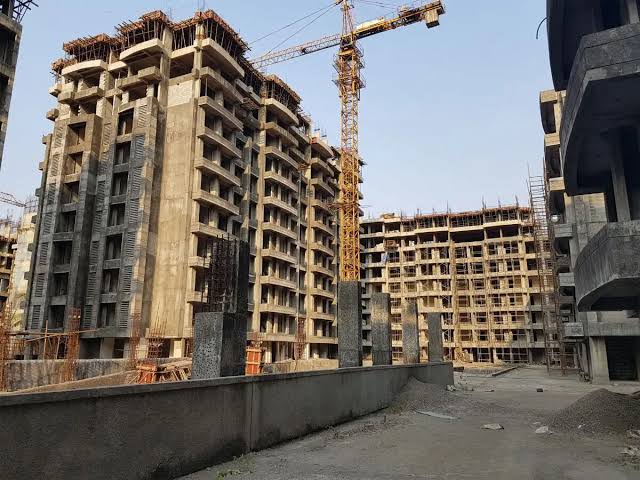
An Expert Committee on the Rehabilitation of Legacy Stalled Real Estate Projects (MoHUA, 2023) observed that stress in real estate projects largely stems from gaps in financial viability, often resulting in cost overruns and delays. The Committee emphasised the importance of priority financing and recommended a proactive role for the SWAMIH Fund in enabling project completion. The underlying premise was clear: unless stalled developments are carried through to completion, the intended expansion in housing supply cannot be fully realised.
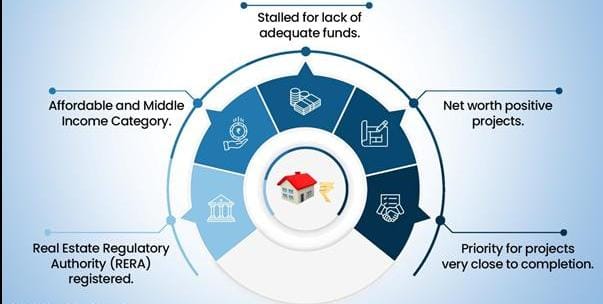
A targeted intervention in the form of SWAMIH was introduced by the Government of India. Launched in 2019, the Special Window for Affordable and Mid-Income Housing Investment Fund provides last-mile financing to housing projects affected by financial constraints. By focusing on completion rather than initiation, SWAMIH seeks to translate partially built structures into delivered homes, safeguard the interests of existing homebuyers, and reinforce confidence in the housing sector. The initiative reflects a broader shift towards outcome-based infrastructure support, where success is measured not only by investment deployed, but by timely delivery and tangible impact on people’s lives.
SWAMIH’s portfolio spans over 146 residential projects across 20 cities and 12 States, positioning SWAMIH as the largest residential-focused stress resolution platform in the country. Through these interventions, the Fund is expected to facilitate the delivery of more than 1 lakh homes, providing relief to over 2.38 lakh people. Building on the success of the original SWAMIH Fund, the government announced in Budget 2025-26 that SWAMIH Fund-2 will be established to further accelerate the completion of stalled housing projects across the country.
More than just a financing vehicle, SWAMIH represents a targeted policy instrument that bridges financial markets, regulatory frameworks, and social needs. Through structured debt financing, strict eligibility measures, and professional fund management, the initiative has delivered tangible results: completed homes, resumed construction activity, and restored faith among homebuyers. As SWAMIH Fund 2 is rolled out, the Government of India continues to strengthen its commitment to Affordable and Mid-Income Housing, using sophisticated policy tools to address structural challenges in one of the country’s most essential sectors.