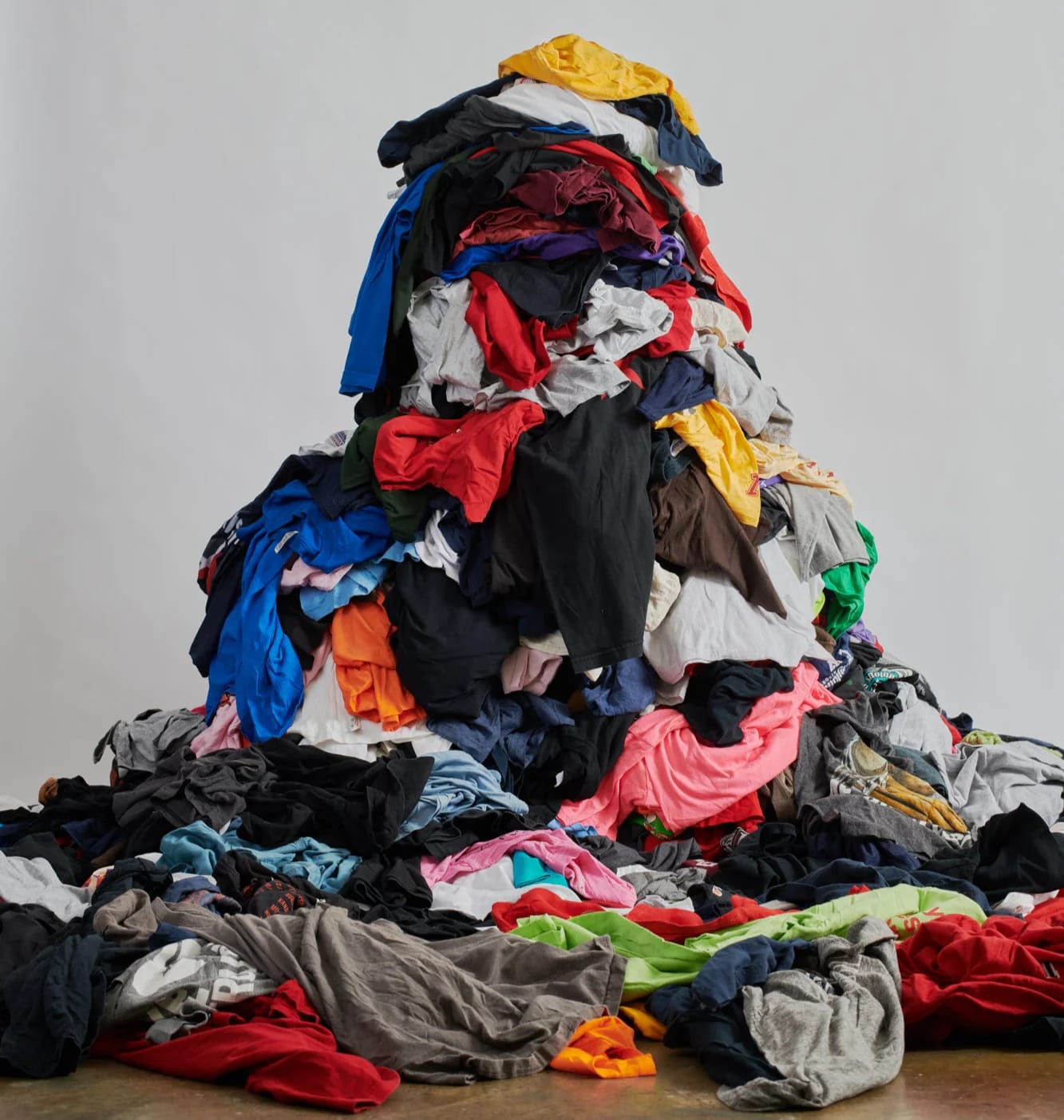
New Delhi: India generates nearly 7.8 million metric tonnes of post-consumer textile waste each year, reflecting the scale and diversity of fabrics used across households, institutions and industries. From sarees and uniforms to denim and household linen, textiles form a significant yet often overlooked component of the urban waste stream. Cities are increasingly recognising the need to develop structured systems for textile recovery, reuse and recycling. With growing attention on circular economy approaches and resource efficiency, municipalities are beginning to explore innovative solutions that prevent textiles from ending up in landfills.
Under the Swachh Bharat Mission–Urban 2.0, the Navi Mumbai Municipal Corporation (NMMC) has emerged as a national pioneer in this space. Recognising the opportunity to address textile waste through systemic intervention, NMMC established India’s first Municipal Textile Recovery Facility (TRF) in Belapur, Navi Mumbai. By integrating decentralised collection, scientific sorting, traceability and women-led livelihood generation, the TRF repositions textile waste from an overlooked stream to a valuable component of the urban circular economy.
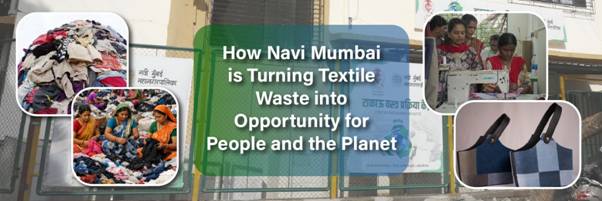
The Textile Recovery Facility (TRF) in Navi Mumbai has been conceptualised not as a standalone collection centre, but as a comprehensive circular ecosystem that integrates collection, sorting, technology and livelihood generation.
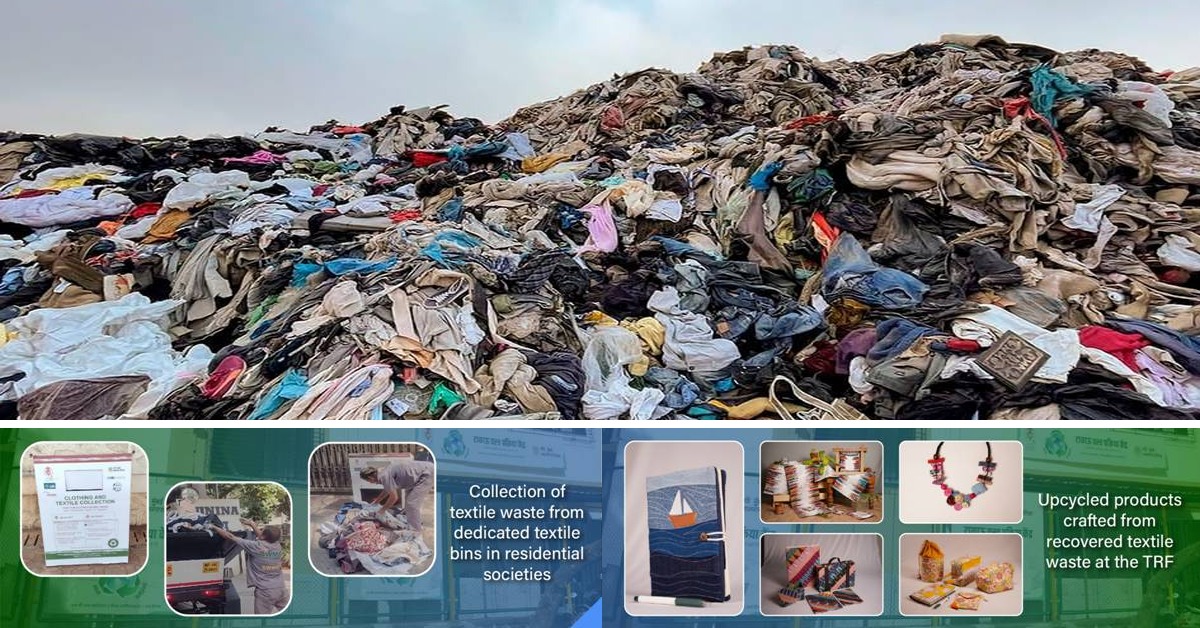
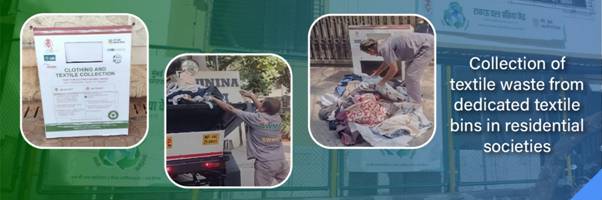
The model begins with decentralised collection, wherein branded textile bins have been strategically deployed across housing societies in all 8 municipal wards. To date, 140 bins have been installed, with the current phase targeting 250, ensuring accessibility and citizen participation at the grassroots level.
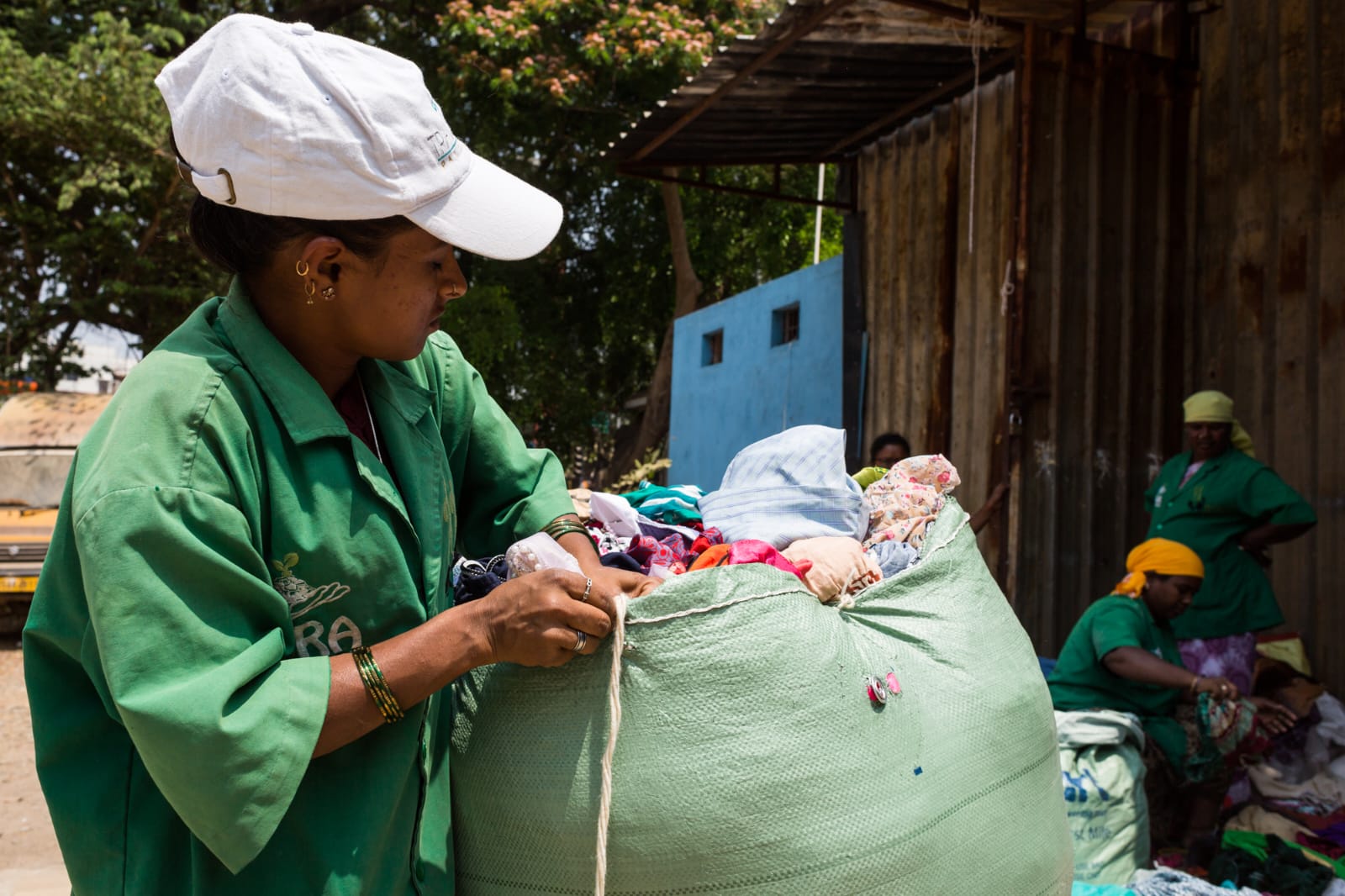
At the interim TRF, established in a repurposed urban health centre in Belapur, the focus is on Scientific Sorting and Traceability. Collected textiles are weighed, tagged and systematically categorised into reusable, recyclable, upcyclable, down cyclable and reject streams. The integration of the KOSHA handheld scanner enables real-time fibre identification — including cotton, polycotton, polyester, wool and silk — thereby strengthening scientific classification and optimising material recovery.
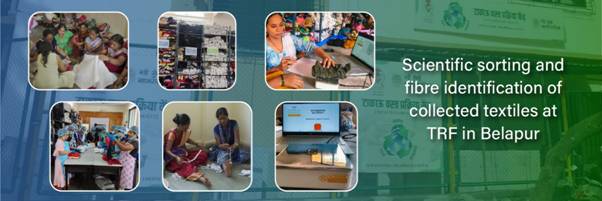
The Digital Tracking, with a dedicated MIS platform under development to facilitate item journey mapping from donor to end-use product, reinforces transparency, accountability and data-driven decision-making. After identification, the textiles are segregated based on fabric type, colour and condition to streamline further processing. The sorted materials are then thoroughly sanitised to ensure hygiene and safety before they are repurposed.
Suitable fabrics are transformed into bags, mats, accessories, apparel and home décor items, handcrafted by skilled women from self-help groups. These upcycled products are later showcased and sold at exhibitions, giving a renewed life and purpose to materials that were once considered waste.
More than 300 women have undergone structured 8-day Training-of-Trainers (ToT) modules covering fibre identification, segregation protocols, repair techniques and upcycling skills. Over 150 women are now actively earning between ₹9,000 and ₹15,000 per month through textile sorting, stitching and product transformation.
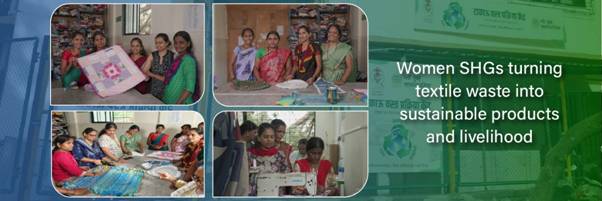
This initiative has marked a transformative shift — enabling homemakers to emerge as skilled circular economy practitioners. The facility operates as a dedicated upcycling centre where Self-Help Group (SHG) members create bags, garments, pouches and home décor products from recovered textiles. Textile recovery has evolved as a structured livelihood engine — generating green jobs, strengthening local enterprise and reinforcing the dignity of labour within an urban sustainability framework.