The mysteries of the cosmos are now clearer and more vivid than ever! From the movements of planets and stars to solar eclipses and the streaks of passing comets—everything will unfold before your eyes in stunning 8K resolution. And this won’t be on an ordinary screen; the imagery of space will be projected across an entire dome. By launching the country’s first 8K LED planetarium, Mysuru in Karnataka has set a new benchmark in the study of space science.
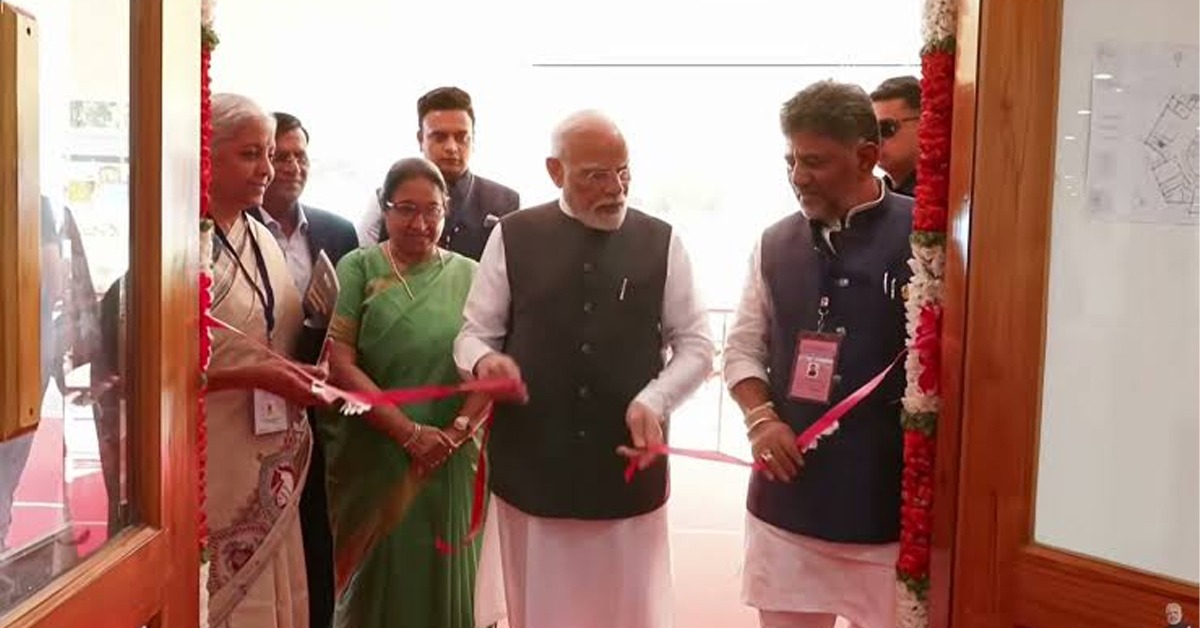
On Friday (13 Nov 2026), Prime Minister Narendra Modi inaugurated the ‘COSMOS-Mysuru’ planetarium. This modern space science center has been established on the campus of the University of Mysore, at the foothills of the Chamundi Hills. Its most striking feature is a 15-meter-wide, tilted LED dome. Unlike traditional planetariums that rely on projectors to display images, the entire dome—constructed from LED panels—serves as a vast screen for depicting the cosmos.
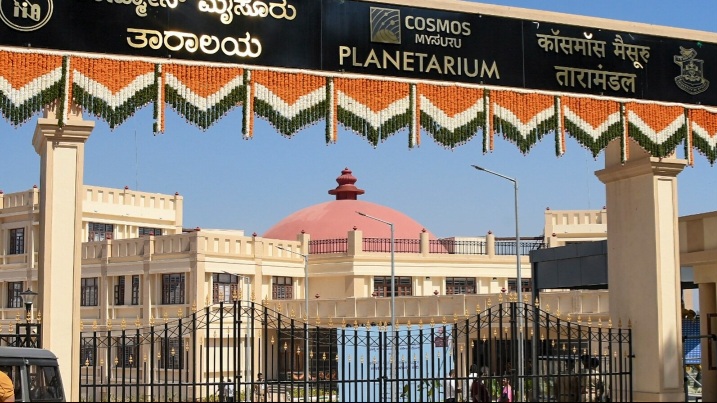
How advanced is this technology? The entire dome features 6,148 LED panels, comprising nearly 42.7 million pixels! As a result, visitors can enjoy vivid, 8K-resolution imagery of various celestial scenes. The facility can accommodate 160 people at once, offering an immersive experience—it’s not just about watching images of space; the planetarium creates the sensation of actually being transported into space itself.
This project has been implemented through a joint initiative between the Indian Institute of Astrophysics (IIA) and the University of Mysore. The Department of Science and Technology, the Department of Atomic Energy, and the Office of the Principal Scientific Adviser have also extended their support. The foundation stone for the project was laid in 2022 by Union Finance Minister Nirmala Sitharaman, who contributed ₹5 crore from her MP’s local area development fund. In total, the construction of this space science centre has cost approximately ₹115 to ₹116 crore.
This centre is set to play a significant role not only in entertainment but also in science education. Inside the planetarium, there is an astronomy museum, an exhibition hall, a lecture room, and a dedicated laboratory for training. Visitors will be able to view various exhibits in three languages: Kannada, English, and Hindi. Consequently, it will prove beneficial to a wide range of people—from school and college students to those with a keen interest in space research.