
Journalist
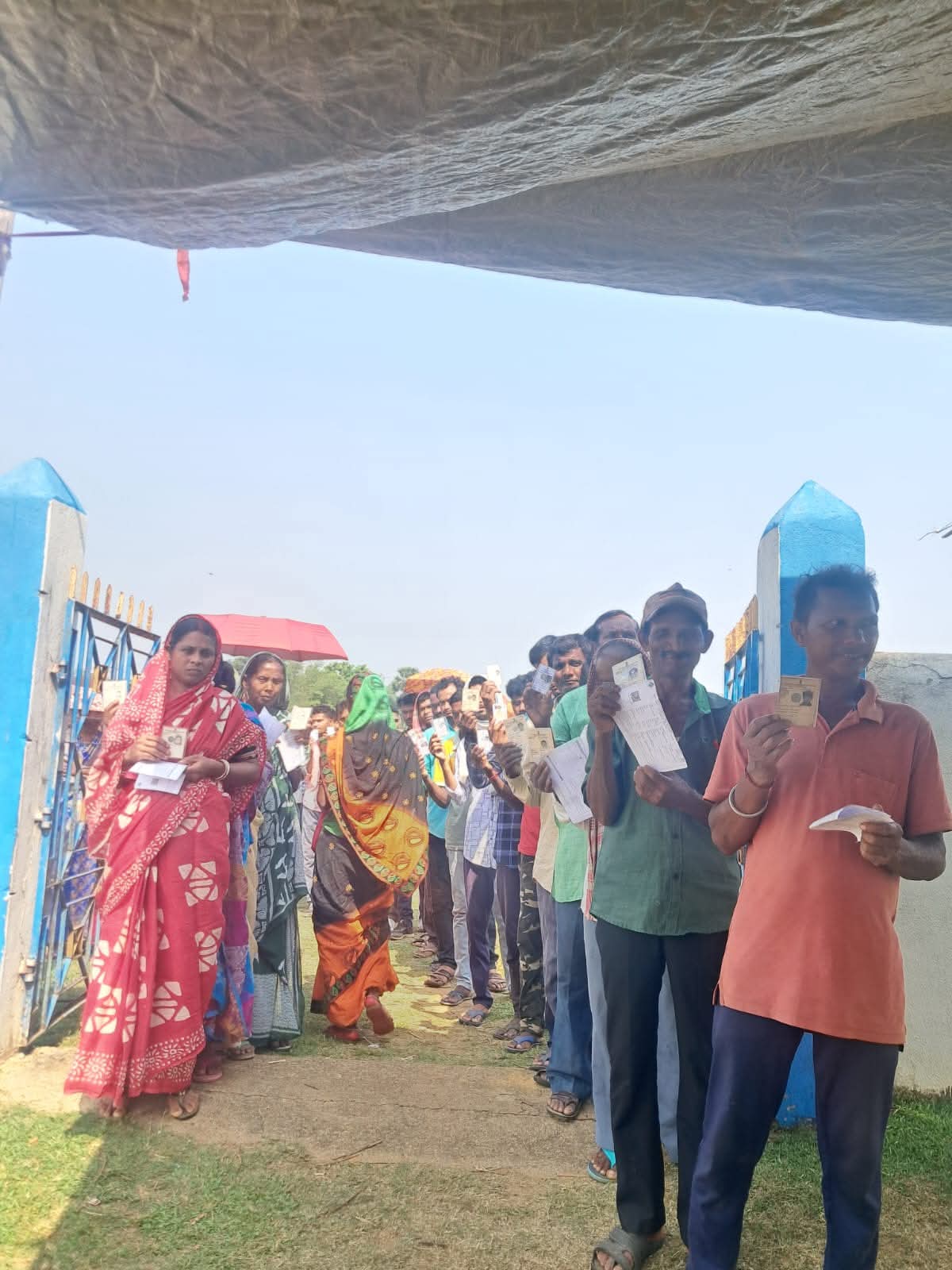
With West Bengal’s two-phase and high voltage Assembly election having come to a close, the inevitable spectacle of exit polls has once again taken centre stage. Their verdicts, as usual, are anything but unanimous. Some forecast a sweeping victory for the Bharatiya Janata Party, others a decisive return for the Trinamool Congress, while a few hedge their bets on a nail-biting contest. This divergence is not merely a matter of differing interpretations—it raises a deeper, more troubling question: how credible are these projections, and what do they truly measure?
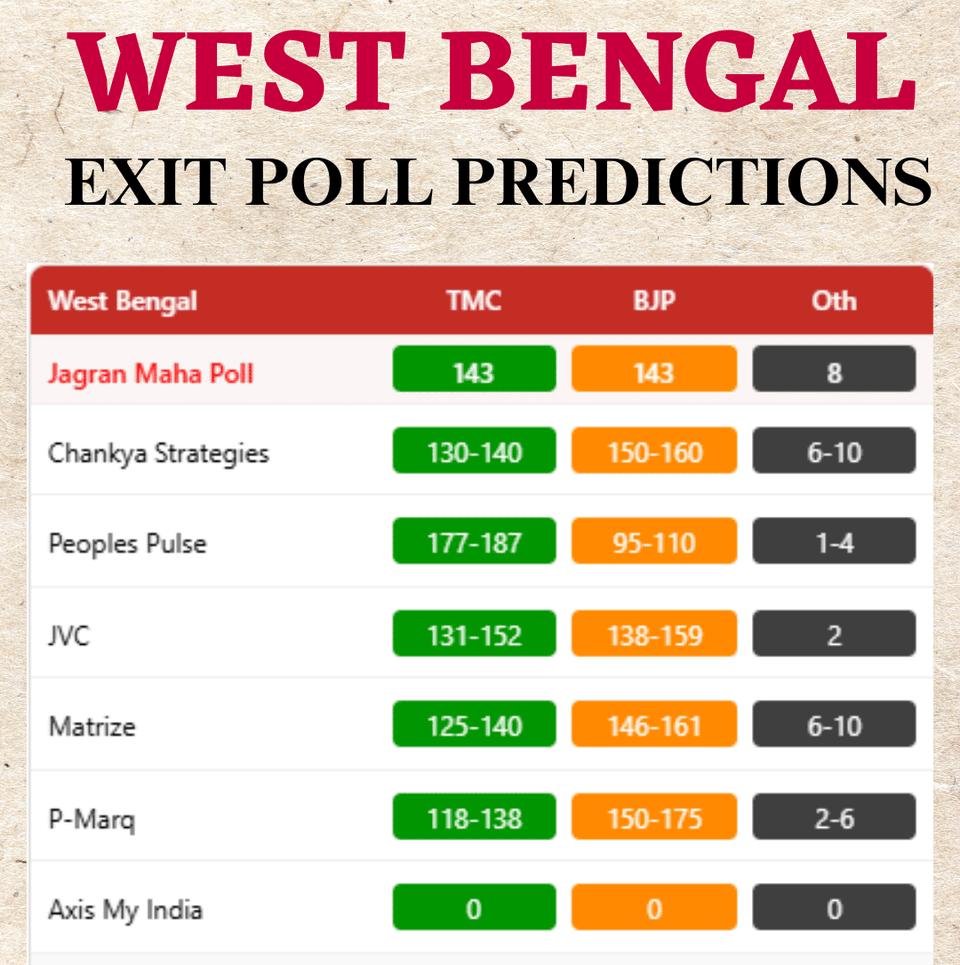
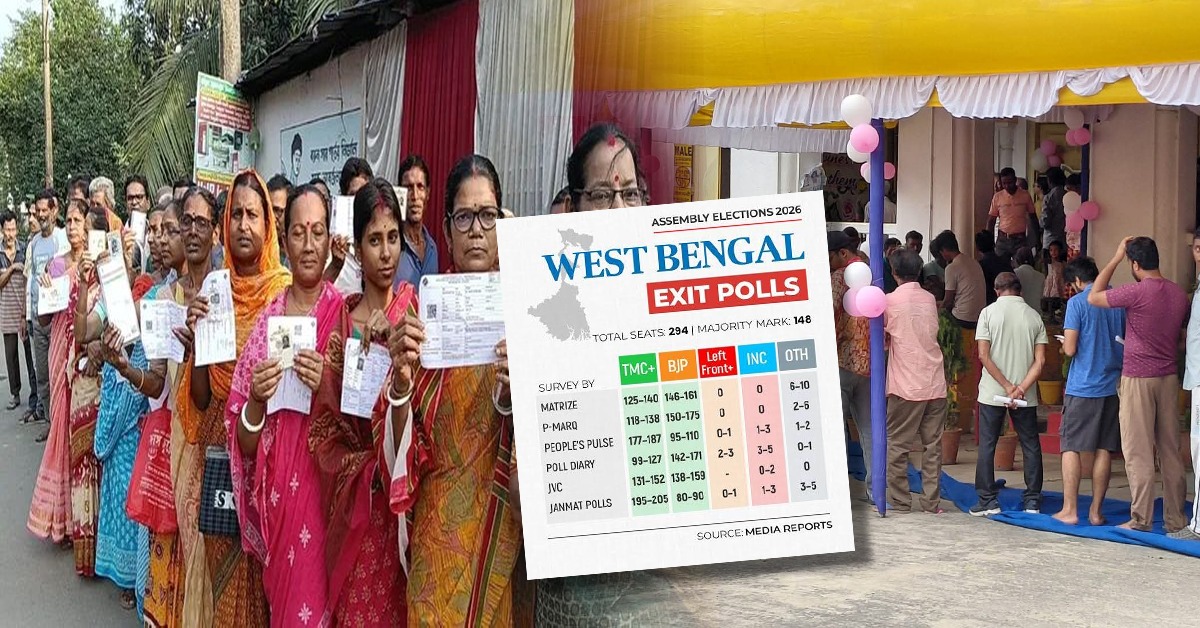
When we apply an analytical framework to West Bengal’s 2026 exit polls, which witnessed unprecedentedly high voters’ turnout (close to 93 per cent), the credibility assessment becomes stark. The agencies now projecting BJP gains (Matrize: 146-161; P-MARQ: 150-175; Chanakya Strategies: 150-160) are the same ones whose methodologies failed catastrophically in 2024, in the same state, against the same opponent. The divergence between agencies—some giving BJP a majority, others giving TMC one (People’s Pulse: 177-187; Janmat: TMC retains)—is not evidence of robust debate but of systemic uncertainty. The 2024 experience demonstrated that when the effective number of parties exceeds two, as it does in Bengal, pollsters consistently fail.
Mind you that the agencies have not come up with their methodologies. They face no quality control, and have no accountability for errors that move markets and shape narratives.
Now consider this. The experience of the 2024 Lok Sabha elections offers a sobering lens. Nearly every major polling agency projected an emphatic landslide for the ruling alliance, only for the final tally to reveal a far more modest outcome. The scale of the miscalculation was not a routine statistical error; it exposed structural infirmities embedded within India’s polling ecosystem. When a chorus of predictions converges so confidently—and collapses so completely—it is worth interrogating the foundations upon which they rest.

At the heart of the problem lies a flawed sampling architecture. India has not conducted a census since 2011, leaving pollsters to rely on demographic baselines that are, by now, profoundly outdated. In a nation transformed by migration, urbanisation, and demographic shifts, such reliance is not a minor inconvenience but a fundamental distortion. The arithmetic of large sample sizes often conceals this fragility. Even extensive surveys, when distributed across vast constituencies, yield respondent pools that are thin relative to the electorate. The illusion of scale masks the reality of insufficiency.
Compounding this is the well-documented “silent voter” phenomenon. In politically sensitive environments, voters may choose discretion over candour, particularly when surveyed by outsiders. In states like West Bengal, where political contestation is often intense, this reticence can systematically skew responses. What emerges is not an accurate reflection of voter intent, but a filtered narrative shaped by caution, fear, or social desirability.

Equally disquieting is the subtle yet pervasive influence of institutional incentives. Media houses and polling agencies operate within a broader ecosystem where political and economic pressures are difficult to ignore. When a dominant narrative takes hold—such as the inevitability of a particular party’s victory—deviating from it entails risk. The result is a form of herd behaviour, where projections align less with independent analysis and more with perceived consensus. In such a climate, error is not merely accidental; it becomes structurally embedded.
Perhaps the most fragile link in this chain is the conversion of vote share into seat projections. This exercise, often presented with mathematical precision, rests on assumptions of uniform swing and historical continuity. Yet Indian elections are increasingly defined by micro-level shifts—caste realignments, regional dynamics, and the influence of smaller parties—that defy such simplifications. When these complexities are flattened into broad models, the outcome is less a forecast than a conjecture dressed in numbers.
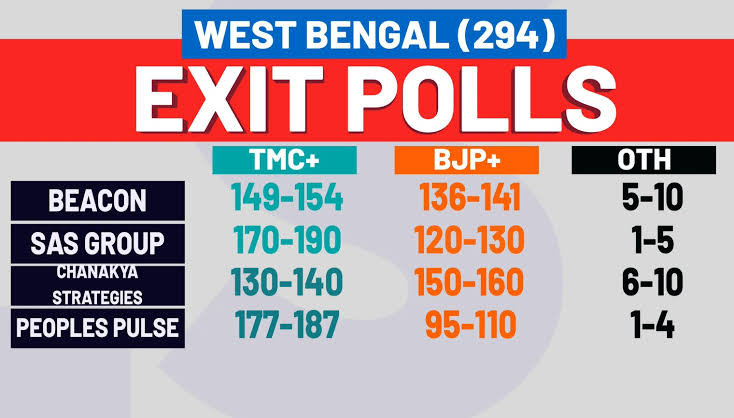
Against this backdrop, the current exit polls for Bengal appear less as instruments of insight and more as reflections of uncertainty. The wide variance in projections—ranging from comfortable majorities to razor-thin contests—does not signal a healthy diversity of opinion. Rather, it underscores the absence of methodological clarity. When predictions span such extremes, their collective value diminishes.
There is also a more disconcerting dimension to consider: the potential for exit polls to shape, rather than merely reflect, public perception. Their influence on financial markets, political narratives, and voter psychology is significant. Whether through design or inadvertent bias, they risk becoming tools of narrative construction rather than empirical measurement.
In the final analysis, exit polls tell us little that is definitive. They hint at competitiveness, reaffirm existing uncertainties, and generate momentary intrigue. But they fall short of offering reliable foresight. For a state like West Bengal, with its complex political fabric and history of polling misfires, the only credible arbiter remains the ballot itself.
Until the votes are counted, certainty must yield to restraint. In an age of instant analysis and amplified speculation, the most prudent stance is not prediction, but patience.