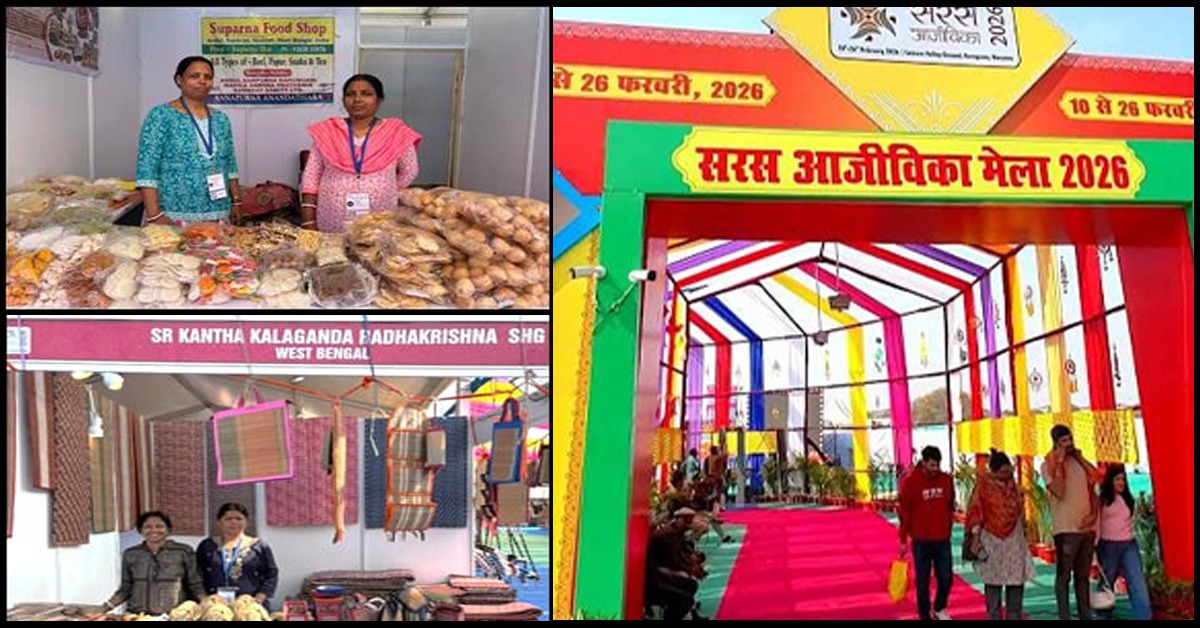
New Delhi: The winter sun had just begun to soften over Gurugram’s glass towers when the gates of Leisure Valley Park in Sector-29 opened to a different kind of skyline, one made not of steel and glass, but of handwoven silk, bamboo craft, spices, songs, and stories. Office-goers slowed their steps, children tugged at their parents’ hands, and the familiar corporate rhythm of the cyber city gave way to the hum of folk music and the scent of freshly cooked regional food. The SARAS Aajeevika Mela, 2026, had arrived, turning the urban landscape into a living canvas of rural India. This national-level fair (from February 10 to 26) feels less like an exhibition and more like a journey across the country. The event brought together over 900 women entrepreneurs from 28 states, representing Self-Help Groups (SHGs).
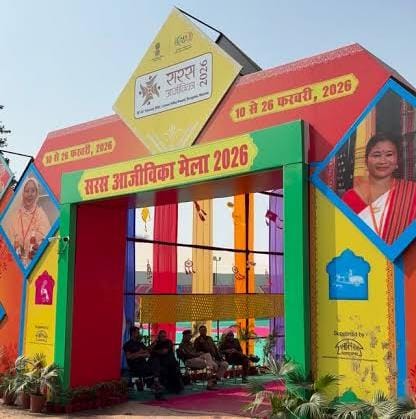
With more than 450 stalls organised across state pavilions, the mela is described as a “Mini India” that presents region-specific products rooted in local traditions and artisanal skills. Visitors encountered Pashmina shawls from Kashmir, silk textiles from Tamil Nadu, embroidered poshaks from Rajasthan, bamboo crafts from Assam, regional foods, handicrafts from West Bengal and other states alongside cultural performances. Beyond its cultural vibrancy, the mela illustrates a structured market linkage model within livelihood promotion frameworks. It demonstrates how curated urban exhibitions can enhance income opportunities, enable direct-to-consumer sales, strengthen brand visibility for SHG products, and promote women-led micro-enterprises within a formalised marketplace.
Beyond the visual appeal of crafts and textiles, the mela foregrounds narratives of institutional support and socio-economic transformation. At one stall, the distinctive golden hue of Assam’s Muga silk immediately draws attention. A Geographical Indication (GI)-recognised product, Muga silk is uniquely produced in Assam and represents a long-standing handloom tradition. A few rows away, a steady stream of visitors gathers around a food stall managed by Suparna Didi from West Bengal, drawn by the aroma of freshly prepared traditional snacks. Formerly managing household responsibilities while supplementing income through irregular insurance work, she sought greater financial stability and autonomy. In 2011, she mobilised ten women to form a Self-Help Group (SHG), initiating small-scale production of papads and regional food items within home-based kitchens.
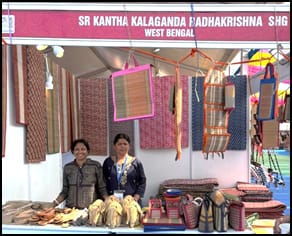
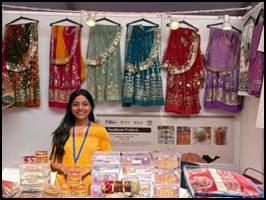
Over time, her enterprise expanded, and she now coordinates multiple SHGs within her gram panchayat. In just a week at the fair, she has sold goods worth over ₹50,000, with profit margins of 60–70 percent over production cost. The production model remains decentralised; women prepare goods at home, which are subsequently aggregated, packaged, and marketed collectively. This system has been strengthened through capacity-building and financial support from the District Rural Development Cell. Participation in exhibitions across Delhi, Noida, Punjab, and Darjeeling has enabled average earnings of approximately ₹1 lakh per event.
However, the transformation extends beyond income generation. SHG meetings function as spaces of mutual support, where women deliberate on household concerns, social constraints, and personal aspirations. Suparna Didi also highlights her daughter’s growing success in pottery, with products showcased at domestic and international fairs. What began as an effort toward financial independence has evolved into a broader process of intergenerational empowerment, illustrating how collective enterprise can reshape social and economic trajectories for rural women and their families.
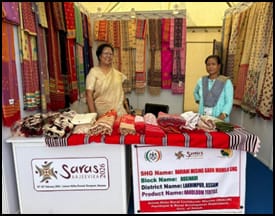
As evening descends and the mela lights illuminate the park, the fair emerges as a microcosm of rural enterprise and collective aspiration. Visitors depart with handloom textiles, crafts, and regional foods, and with inspiring stories of mentorship, entrepreneurship, and community-driven innovation rooted in tradition and shared prosperity. In a fast-paced urban setting, the SARAS Aajeevika Mela creates space to recognise the labour, resilience, and livelihoods embedded in each stall.