
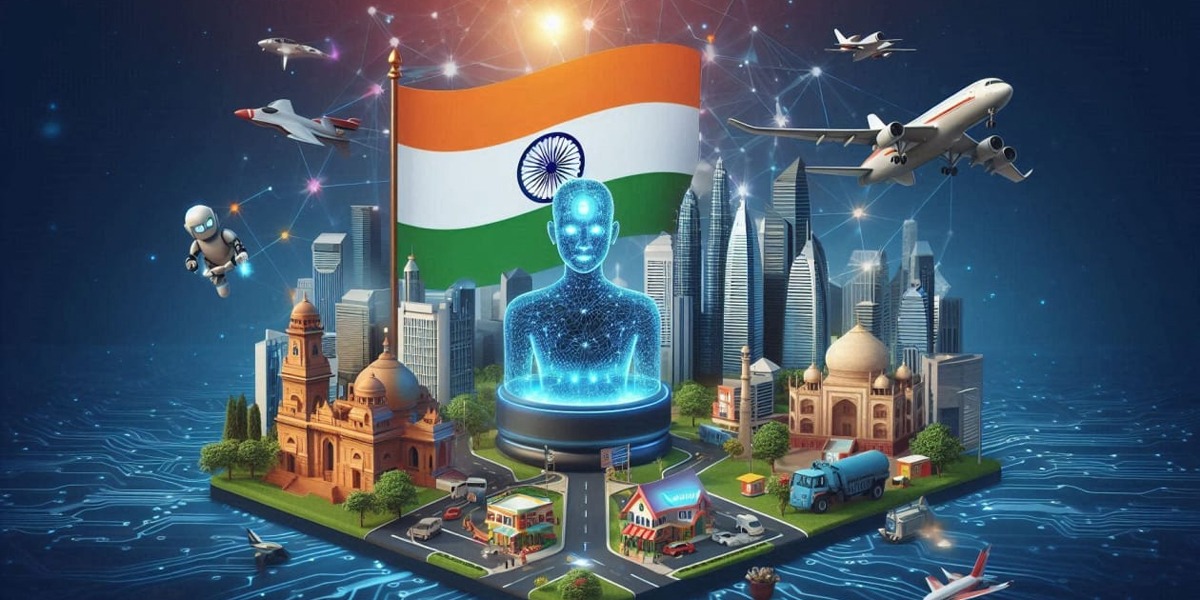
New Delhi: India stands at the cusp of a new era powered by Artificial Intelligence (AI), where technology is transforming lives and shaping the nation’s progress. AI is no longer limited to research labs or big corporations. It is reaching citizens at every level. From improving healthcare access in remote areas to helping farmers make informed crop decisions, AI is making daily life simpler, smarter, and more connected. It is revolutionising classrooms through personalised learning, making cities cleaner and safer, and enhancing public services through faster, data-driven governance.
Initiatives such as the IndiaAI Mission and the Centres of Excellence for AI are at the heart of this transformation. They are expanding access to computing power, supporting research, and helping startups and institutions create solutions that directly benefit people. India’s approach focuses on making AI open, affordable, and accessible, ensuring that innovation uplifts society as a whole.
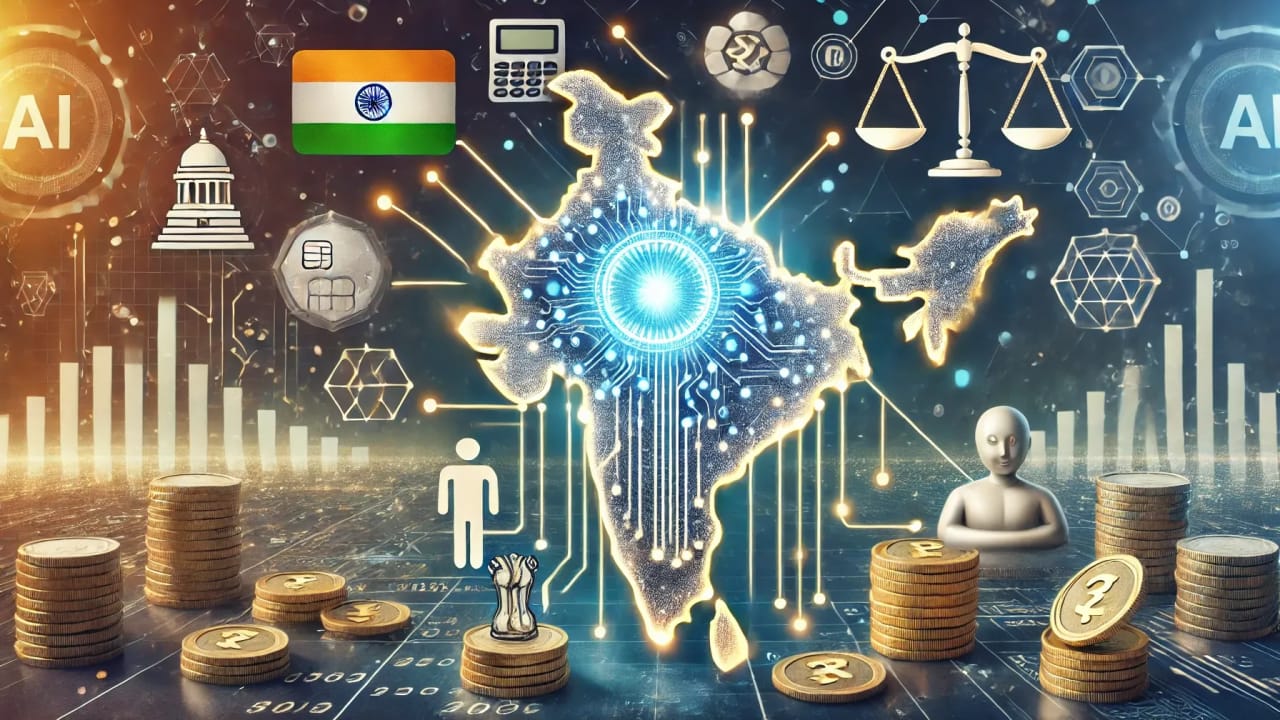
What is Artificial Intelligence?
Artificial Intelligence (AI) is the ability of machines to perform tasks that normally require human intelligence. It enables systems to learn from experience, adapt to new situations, and solve complex problems independently. AI uses datasets, algorithms, and large language models to analyse information, recognise patterns, and generate responses. Over time, these systems improve their performance, allowing them to reason, make decisions, and communicate in ways similar to humans.
This inclusive vision is also reflected in NITI Aayog’s report, AI for Inclusive Societal Development (October 2025). The report shows how AI can empower India’s 490 million informal workers by expanding access to healthcare, education, skilling, and financial inclusion. It highlights how AI-driven tools can boost productivity and resilience for millions who form the backbone of India’s economy. The report also stresses that technology can bridge deep social and economic divides, ensuring that the benefits of AI reach every citizen.
As India builds an inclusive AI ecosystem, its growing global recognition reflects this progress. Rankings such as the Stanford AI Index place India among the top four countries in AI skills, capabilities, and policies. The country is also the second-largest contributor to AI projects on GitHub, highlighting the strength of its developer community. With a strong STEM workforce, expanding research ecosystem, and growing digital infrastructure, India is positioning itself to harness AI for economic growth, societal progress, and the long-term vision of Viksit Bharat by 2047.

India is the world’s third most AI-competitive nation
India has secured the 3rd position globally in Artificial Intelligence competitiveness, according to a report by Stanford University’s 2025 Global AI Vibrancy Tool. The ranking emphasises India’s rapid growth in the global AI landscape. The report measures AI growth and innovation from 2017 to 2024. This recent achievement underscores India’s rapidly growing AI talent, strong research capabilities, vibrant startup ecosystem, investment and economic impact, infrastructure, and policy and governance.
The seven pillars of the IndiaAI Mission are:
1. IndiaAI Compute Pillar:
This pillar provides high-end GPUs at affordable costs. As mentioned earlier, over 38,000 GPUs have been onboarded. These GPUs are available at a subsidized rate of just ₹65 per hour.
2. IndiaAI Application Development Initiative:
This pillar develops AI applications for India-specific challenges. Sectors include healthcare, agriculture, climate change, governance, and assistive learning technologies. Thirty applications have been approved by July 2025. Sector-specific hackathons are organized with ministries and institutions. For example, the CyberGuard AI Hackathon helps develop AI solutions for cybersecurity.
3. AIKosh (Dataset Platform)
AIKosh develops large datasets for training AI models. It integrates data from government and non- government sources. The platform has over 5,500 datasets and 251 AI models across 20 sectors. These resources help developers focus on AI solutions instead of building basic modules. The platform has over 385,000 visits, 11,000 registered users, and 26,000 downloads by December 2025.
Smarter Infrastructure and Stronger Industrial Growth through Industrial Parks
4. IndiaAI Foundation Models
This pillar develops India’s own Large Multimodal Models using Indian data and languages. It ensures sovereign capability and global competitiveness in generative AI. IndiaAI received over 500 proposals. In the first and second phase, twelve startups were selected: Sarvam AI, Soket AI, Gnani AI, Gan AI, Avaatar AI, IIT Bombay consortium – BharatGen, Zenteiq, Gen Loop, Intellihealth, Shodh AI, Fractal Analytics, Tech Mahindra Maker’s Lab.

5. IndiaAI Future Skills
This pillar builds AI-skilled professionals. Support is provided to 500 PhD fellows, 5,000 postgraduates, and 8,000 undergraduates. Over 200 students received fellowships by July 2025. 73 institutes onboarding PhD students. Data and AI Labs are being set up in Tier 2 and Tier 3 cities. Thirty-One labs have been launched with NIELIT and Industry Partners. States and UTs nominated 174 ITIs and polytechnics for labs.
6. IndiaAI Startup Financing
This pillar provides financial support to AI startups. The IndiaAI Startups Global program launched in March 2025. It helps 10 Indian startups expand into the European market in collaboration with Station F and HEC Paris.
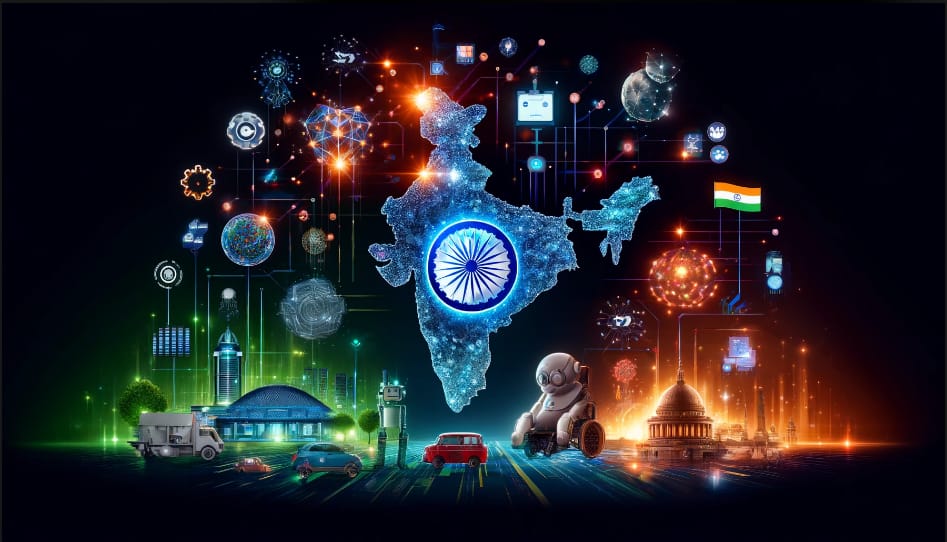
7. Safe and Trusted AI
This pillar ensures responsible AI adoption with strong governance. 13 projects have been selected and initiated through Expressions of Interest. They focus on machine unlearning, bias mitigation, privacy-preserving ML, explainability, auditing, and governance testing. An additional expression of interest was published on 9 May 2025 for partner institutions to join the IndiaAI Safety Institute.
Artificial Intelligence took centre stage at the 9th India Mobile Congress, inaugurated by Prime Minister Shri Narendra Modi on 8th October 2025 at Yashobhoomi, New Delhi. Organised by the Department of Telecommunications and COAI, the event ran from 8th to 11th October under the theme “Innovate to Transform.”
Will AI Lead to Unemployment?
Artificial Intelligence is often seen as a threat to jobs, but in reality, it is creating new kinds of opportunities. According to NASSCOM’s report “Advancing India’s AI Skills” (August 2024), India’s AI talent base is expected to grow from about 6 to 6.5 lakh professionals to more than 12.5 lakh by 2027, at a compound annual growth rate of 15 percent.
AI is driving demand in areas such as data science, data curation, AI engineering, and analytics. As of August 2025, around 8.65 lakh candidates have enrolled or trained in various emerging technology courses, including 3.20 lakh in AI and Big Data Analytics.
To prepare the workforce for the future, the Ministry of Electronics and Information Technology, MeitY, has launched FutureSkills PRIME, a national programme focused on reskilling and upskilling IT professionals in 10 new and emerging technologies, including AI. As of August 2025, more than 18.56 lakh candidates had signed up on the FutureSkills PRIME portal, and over 3.37 lakh had successfully completed their courses.
AI is reshaping governance and public service delivery. As per the Supreme Court of India, under e-Courts Project Phase III, modern technologies are being integrated to make the justice system more efficient and accessible. Artificial Intelligence and its subsets such as Machine Learning, Optical Character Recognition, and Natural Language Processing are being used in translation, prediction, administrative efficiency, automated filing, intelligent scheduling, and communication through chatbots.AI Translation Committees in High Courts are overseeing the translation of Supreme Court and High Court judgments into vernacular languages. Digital legal platforms such as e-HCR and e-ILR now provide citizens online access to judgments in multiple regional languages, making justice delivery more transparent and inclusive.
India’s journey in Artificial Intelligence reflects a clear vision and decisive action. From expanding computing infrastructure to fostering homegrown models and supporting startups, the country is creating a robust AI ecosystem that benefits citizens and drives innovation. Initiatives in agriculture, healthcare, education, and governance demonstrate practical applications with real impact. Strategic initiatives like the IndiaAI Mission, Digital ShramSetu, and foundational model development are ensuring that innovation reaches every citizen while fostering research, skills, and entrepreneurship. These efforts lay a strong foundation for India to emerge as a global AI leader while advancing the vision of Viksit Bharat 2047.