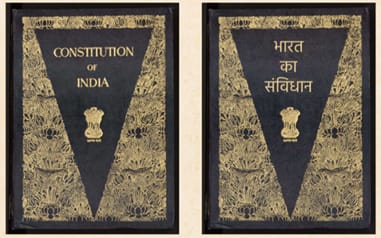
New Delhi: Republic Day marks a defining milestone in India’s national journey. It marks the day the Constitution of India came into force on 26th January 1950, formally establishing the country as a ‘Sovereign Democratic Republic’. While independence on 15th August 1947 ended colonial rule, it was the adoption of the Constitution that completed India’s transition to self-governance based on law, institutional accountability, and the will of the people of India.
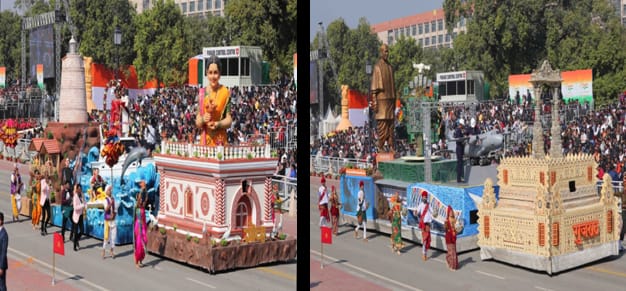
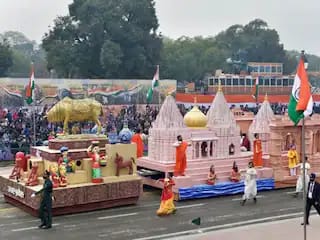
This constitutional milestone is commemorated each year through observances that reflect the functioning of democratic institutions and the diversity of the nation. Republic Day celebrations bring constitutional ideals into the public domain, most visibly through the national ceremony and parade held in New Delhi along the Kartavya Path. The parade presents a coordinated display of military discipline, cultural heritage, and regional representation, with tableaux from states and Union Territories highlighting India’s cultural plurality. Across the country, flag-hoisting ceremonies, official programmes, and cultural events are organised in state capitals, districts, educational institutions, and local communities. These events make Republic Day a shared civic occasion that reaffirms the values and principles enshrined in the Constitution.
77th Republic Day: 150 Years of Vande Mataram
The 77th Republic Day celebrations are organised around the central theme “150 Years of Vande Mataram”. The theme runs across the Republic Day Parade, cultural performances, tableaux, public competitions, and outreach programmes, placing the national song at the heart of this year’s observance while linking freedom, cultural expression, and contemporary national aspirations. At the national level, the Republic Day Parade 2026 has been done as a large-scale ceremonial and cultural event with enhanced public participation. The President of the European Council and the President of the European Commission are the Chief Guests, reflecting India’s engagement with key international partners. This year’s parade features a Battle Array format by the Indian Army for the first time, alongside traditional marching contingents and service presentations.
26th January: From Purna Swaraj to the Constitution
The decision to declare 26th January as Republic Day reflects a deliberate historical choice to anchor India’s constitutional beginning in the milestones of its freedom struggle. Over two decades, the date came to symbolise a clear progression—from the assertion of complete independence in 1930 to the formal adoption of a constitutional system of self-government in 1950. Understanding this journey is essential to understanding Republic Day itself, as it reveals how political aspiration was gradually transformed into a durable, constitutional order. When the Constitution came into effect on 26th January 1950, India was formally established as a Sovereign Democratic Republic, marking the beginning of constitutional governance in independent India. Through the 42nd Amendment Act in 1976, ‘Socialist and Secular’ were added, thereby making India Sovereign, Socialist Secular Democratic Republic. The newly drafted Constitution was enforced by replacing the Government of India Act 1935. With this, authority was given to democratic institutions operating under the Constitution, and sovereignty was placed with the people. The choice of 26th January was deliberate, as the date carried the historical legacy of the Purna Swaraj observance of 1930, when complete independence had been asserted as the national objective. By bringing the Constitution into force on this date, independent India symbolically connected the political aspirations of the freedom movement with the institutional framework of a constitutional republic.
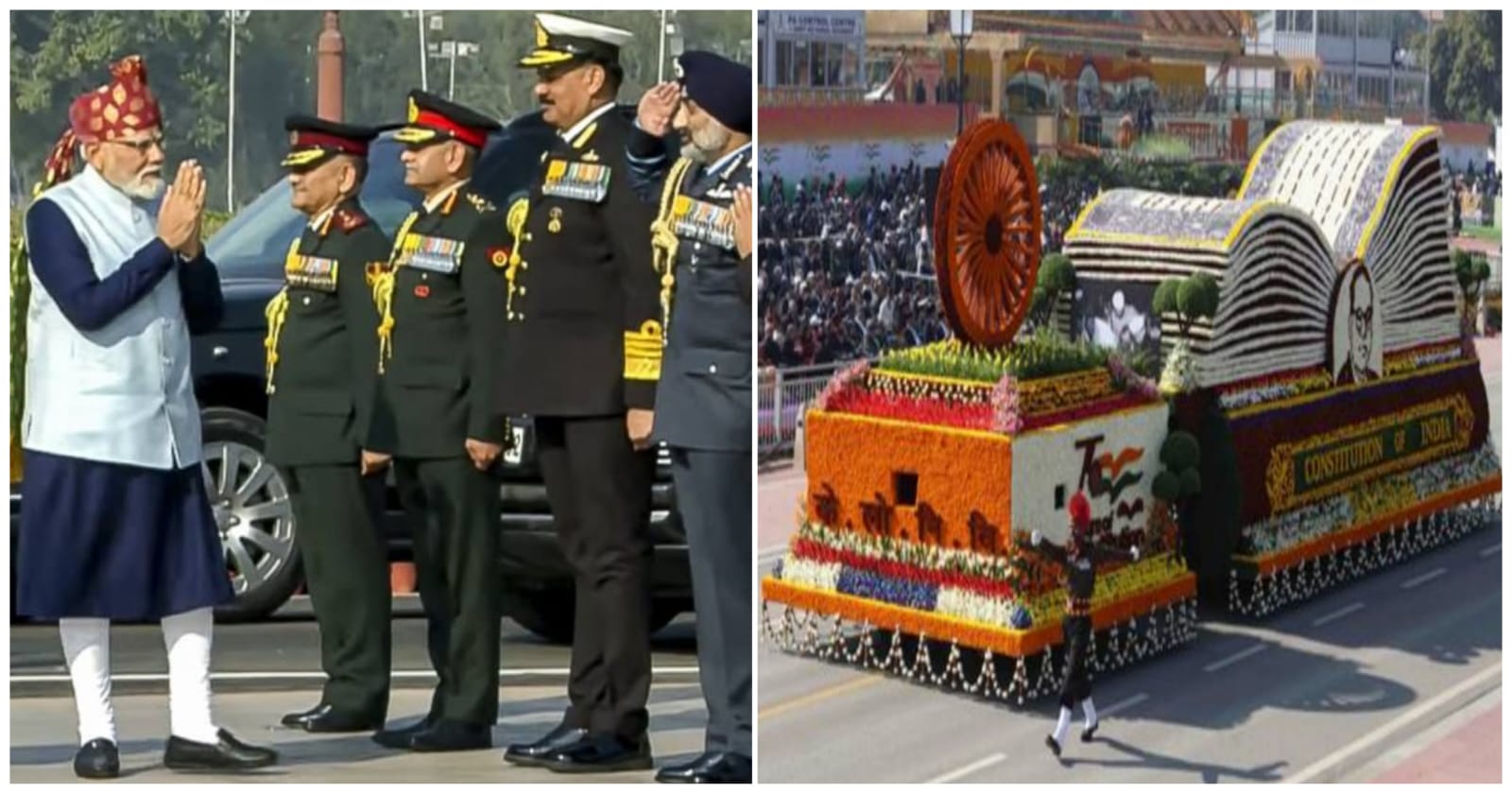
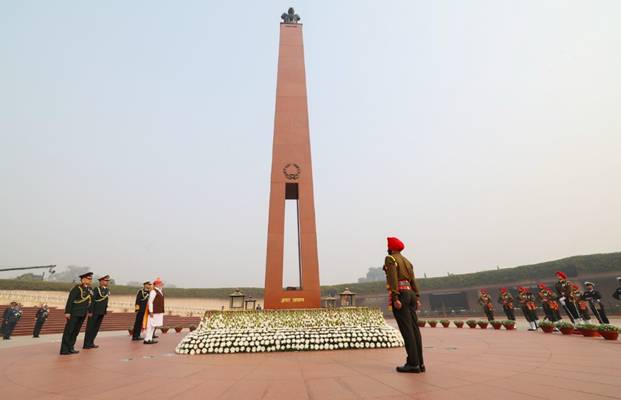
Republic Day unfolds each year as a shared national moment, where ceremony, colour, and collective memory come together. From the capital to the farthest corners of the country, the day is marked by flag hoisting ceremonies and parades by armed forces and school children, creating a shared sense of significance. The grandest and most important of these parades is held at the Kartavya Path in New Delhi, which showcases a multi-hued image of the country’s cultural heritage and military prowess. The day begins with a solemn tribute at the National War Memorial, where the Prime Minister pays homage to our fallen soldiers, setting a reflective tone before the main ceremony.
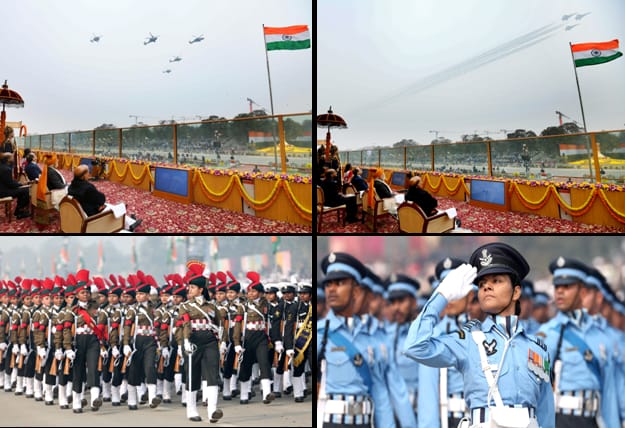
At Kartavya Path, the arrival of the President of India formally marks the commencement of the proceedings. The unfurling of the National Flag, accompanied by the National Anthem and a 21-gun salute, signals the beginning of the parade. Marching contingents of the Army, Navy and Air Force, along with other uniformed services, pass in ceremonial formation, reflecting discipline and coordination. Mechanised columns and selected defence presentations further add to the spectacle. A distinctive feature of the parade is the presentation of tableaux by States/ Union Territories and the Ministries, which highlight regional culture and themes of national importance. Cultural performances integrated into the procession also add visual depth without interrupting its formal rhythm. One of the main functions of the parade is to honour the martyrs who have sacrificed their lives for the country and to bestow bravery awards upon military personnel and citizens. Signature segments such as the motorcycle display and the Indian Air Force fly past bring the parade to its grand conclusion.
The ceremonial observances conclude a few days later on January 29. This is called the Beating the Retreat ceremony which is held at Vijay Chowk, marking the formal close of Republic Day celebrations. ‘Beating Retreat’ marks a centuries old military tradition, when the troops ceased fighting, sheathed their arms and withdrew from the battlefield and returned to the camps at sunset at the sounding of the Retreat.