

Journalist
The sudden Enforcement Directorate onslaught on Trinamool Congress’s political and election strategist, I-PAC, and its helmsman Prateek Jain—allegedly in connection with a seven-year-old case—has opened a Pandora’s box of sorts. It has raised far more questions than it has answered, questions that have only multiplied after West Bengal Chief Minister and Trinamool supremo Mamata Banerjee rushed to Jain’s Loudon Street residence and Salt Lake office, and reportedly took away certain confidential political strategy papers having little or nothing to do with the alleged coal scam.
The first and most obvious question relates to timing. Why did the ED, after years of apparent inertia, suddenly wake up on the eve of crucial polls? For six or seven long years, neither I-PAC nor Prateek Jain figured in the narrative of the so-called coal scam. There were no summons, no notices, no public mention. The abruptness of the action, therefore, has fuelled suspicions that this is less about old files and more about current politics.

The second question, predictably raised by Mamata Banerjee’s detractors, concerns legality and propriety. Was it legally correct for a Chief Minister to rush to the site of an ED action and remove documents in the midst of a raid? On the face of it, the optics may appear questionable. But to reduce Mamata Banerjee to a naïve political actor unaware of protocol or law would be absurd.
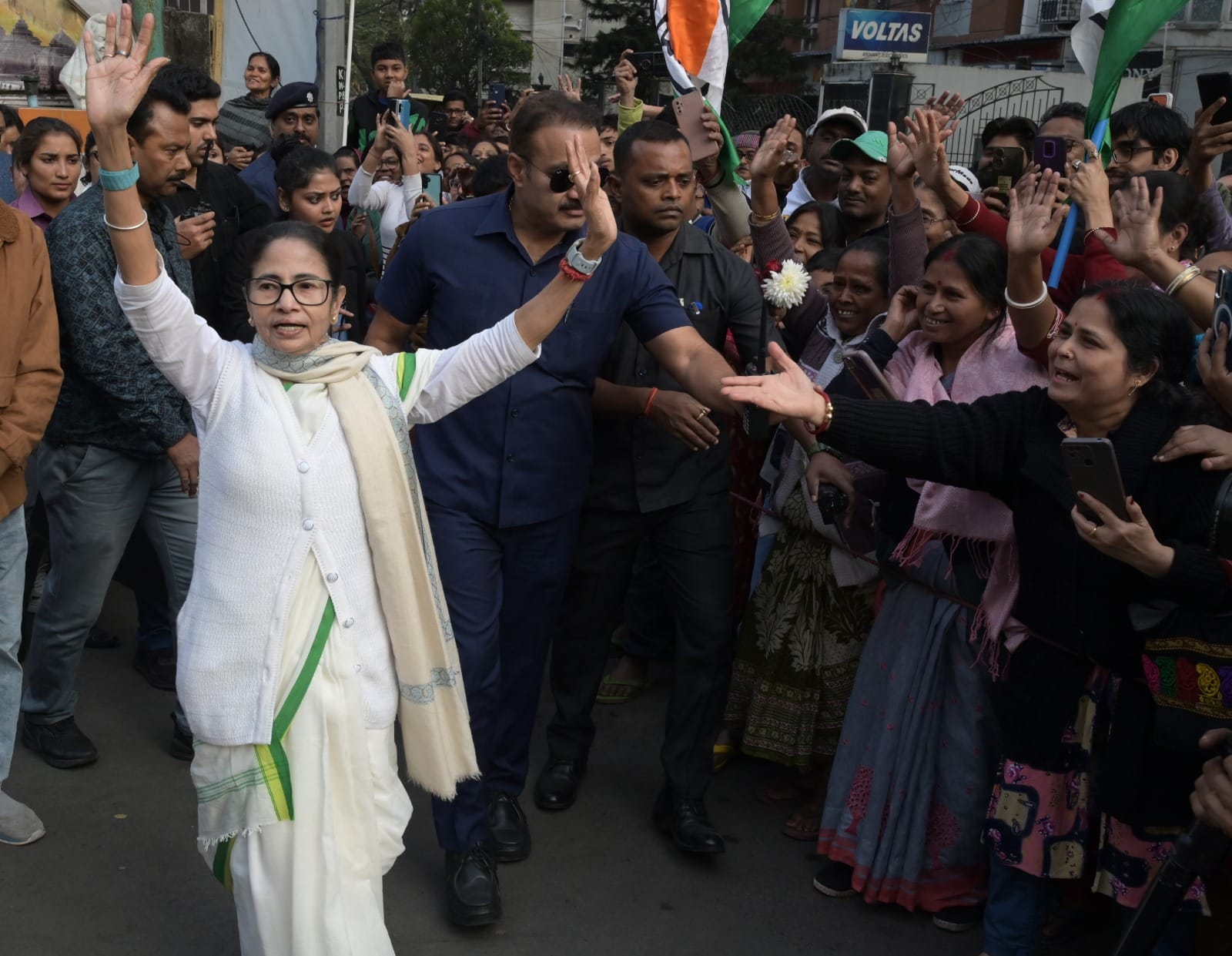
Mamata Banerjee is no political greenhorn. An astute politician with an unparalleled 24×7 connect with the masses, she understands both the grammar of law and the pulse of the street. Few leaders in contemporary India read popular sentiment as intuitively as she does. She knows precisely what is legally defensible, what is politically risky, and what is emotionally resonant with her core constituency.

Beyond Barefoot – A Life of Endurance & Defiance
She did, therefore, what she believed was most consistent with her style and brand of politics. Mamata Banerjee is where she is today because of her firebrand nature. Aptly described over the years as a “Stormy Petrel”, she has repeatedly taken to the streets and appealed directly to the people whenever she felt politically cornered. More often than not, that instinctive leap into the public arena has paid rich dividends. This episode, from her perspective, is no exception.
There is also a deeper cultural undercurrent at play. Bengal has historically rallied behind fighters—those who challenge authority head-on. Netaji Subhas Chandra Bose, judged purely by organisational discipline, may not have been the Congress’s ideal soldier, but he is hero-worshipped far more for his indomitable fighting spirit than Mahatma Gandhi, the global apostle of non-violence. Mamata Banerjee, consciously or otherwise, taps into that same emotional reservoir.

To her supporters, the ED action appears less like routine enforcement and more like a political provocation. The suspicion that this may be part of a larger game plan—to create instability, engineer turmoil and build a case for extraordinary constitutional measures before elections—cannot be dismissed lightly, given recent political precedents elsewhere. The saffron brigade’s record of destabilising opposition-ruled states through means other than direct electoral defeat is well documented.

If anything consistently stands in the way of such designs in Bengal, it is Mamata Banerjee’s never-say-die attitude. Time and again, she has turned adversity into advantage. This episode too may well end up as another self-goal—one that strengthens, rather than weakens, the street-fighter politics she so effortlessly embodies.