
Filmmaker- Actor
In the recent past, Indian cinema has increasingly turned to literature as a source of depth, authenticity, and cultural pride. Across regions—especially Bengali, Malayalam, and Gujarati—filmmakers have celebrated literary works through inventive adaptation and sensitive reinterpretation, reaffirming the enduring relevance of the written word.
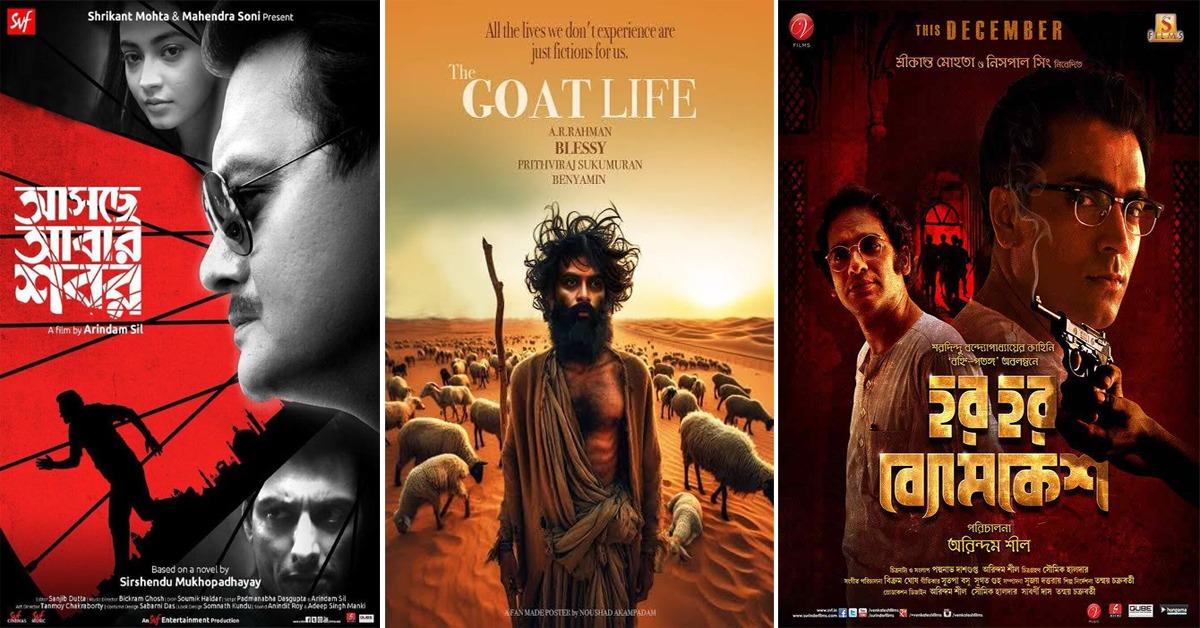
Bengali cinema has been at the forefront of this revival. Filmmakers have continued to reimagine classics as well as modern literary voices. Adaptations, specially detective-universe films inspired by Sharadindu Bandyopadhyay’s Byomkesh or Sunil Gangopadhyay’s Kakababu, Satyajit Ray’s Feluda, Sirshendu Mukhopadhyay’s Shabor and Suchitra Bhattacharya’s Mitin have drawn younger audiences toward Bengali literary heritage. Works of authors like Rabindranath Tagore, Bankim Chandra Chattopadhyay, Shirshendu Mukhopadhyay, Suchitra Bhattacharya and Buddhadeb Guha have repeatedly found cinematic expressions in recent years, proving the timelessness of their storytelling. And to add to it a few modern writings are being adapted which include Dipannita Roy to playwright Bratya Basu.
Malayalam cinema, meanwhile, has shown a powerful resurgence of literary adaptations rooted in realism and social sensitivity. Films like Aadujeevitham (The Goat Life)—adapted from Benyamin’s celebrated novel—brought literary Malayalam to a global platform. Adaptations such as Nanpakal Nerathu Mayakkam, inspired by short fiction traditions, and Ayisha, rooted in biographical literature, highlight the region’s commitment to nuanced, character-driven narratives. Malayalam filmmakers have consistently used literature not merely as plot but as a guiding philosophy of rhythm, silence, and human detail.
More News: From Nehru to Modi: India, Russia, US and the Art of Strategic Balance
Gujarati cinema has also embraced literature with new enthusiasm. Adaptations of Dhruv Bhatt’s novels, such as Tariq (based on Tatvamasi), and films inspired by the works of Kajal Oza Vaidya and Varsha Adalja have broadened the emotional and social canvas of Gujarati filmmaking. These films reconnect younger audiences with regional literary icons while offering narratives rich in introspection and cultural texture.
Across India, OTT platforms have further encouraged long-form adaptations, allowing stories to unfold with literary fidelity. Through these varied efforts, Indian cinema in the last few years has not only adapted literature—it has honoured, amplified, and reintroduced it to an entirely new generation of viewers.