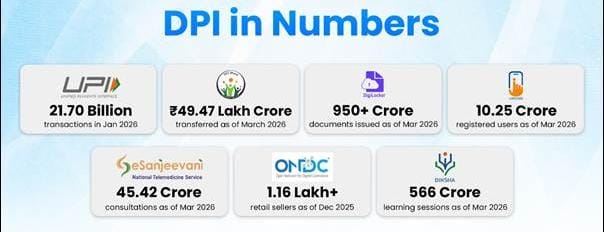

New Delhi: Digital Public Infrastructure (DPI) is reshaping how nations govern, transact and deliver services. In this transformation, India has moved from being a large user of digital systems to a builder of population scale digital architecture. What distinguishes India’s approach is scale, openness and integration. Identity, payments and data exchange have been connected through interoperable public rails that support welfare delivery, economic activity and state capacity.
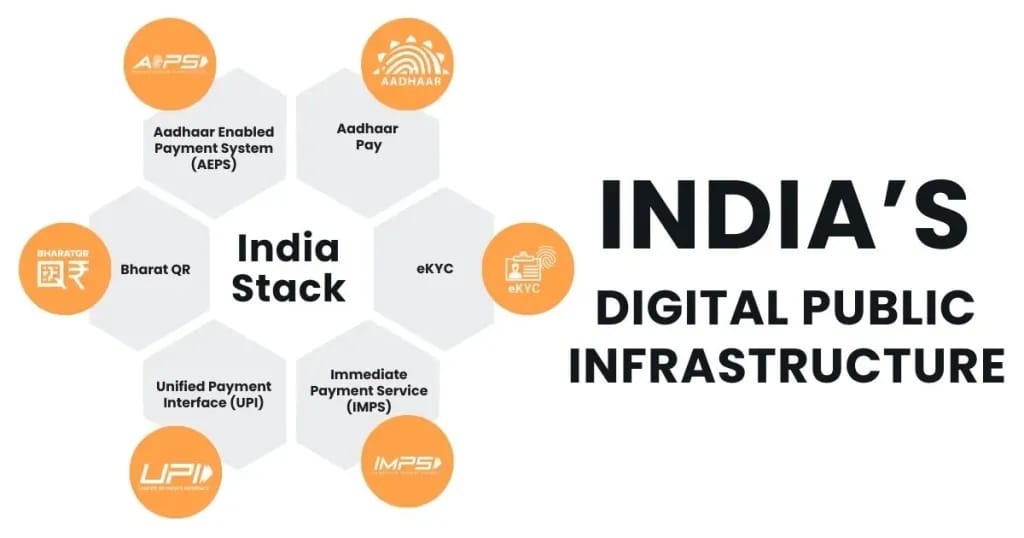
As countries around the world search for trusted and inclusive digital pathways, India’s experience is drawing sustained attention. The model demonstrates that digital infrastructure can be designed as a public good rather than a closed platform. It shows that inclusion and efficiency can advance together. In doing so, India is steadily shaping the global conversation on how digital systems should be built and governed in the twenty first century.
Infrastructure today is no longer limited to roads, ports and power grids. It is digital. The United Nations defines Digital Public Infrastructure as a set of foundational digital systems that form the backbone of modern societies. These systems enable secure and seamless interaction between people, businesses and governments. From verifying identity and opening bank accounts to enabling instant digital payments and safe data exchange, DPI shapes everyday life. Like railways once connected regions to opportunity, digital infrastructure now determines who can access services, markets and rights in the modern economy.

For digital infrastructure to deliver public value, it must be inclusive, interoperable and governed in the public interest. A well designed digital identification system can support subsidy delivery, voter registration and secure banking. When linked with payments and data exchange frameworks, it creates a unified architecture that strengthens state capacity and widens opportunity.
Against this backdrop, India’s experience offers a working demonstration of what population scale digital public infrastructure can achieve. India has built digital public infrastructure for over 1.4 billion people at very low cost. It is an open and accessible network, backed by regulation and a wide range of applications that modernise the economy, reform governance and transform lives. In India’s case, the principles of inclusion, innovation and trust are operational realities of its DPI ecosystem. At population scale, and with measurable impact, India has demonstrated that digital systems can deepen democracy while accelerating development.

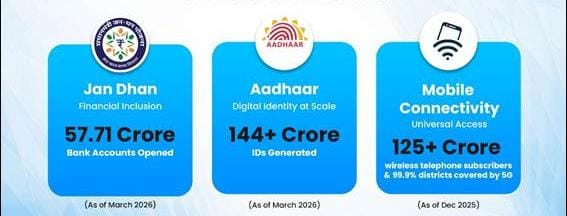
India’s digital public infrastructure did not emerge overnight. It was seeded through a deliberate convergence of identity, banking and connectivity. This convergence took shape as the JAM trinity. Jan Dhan bank accounts, Aadhaar enrolment and widespread mobile phone penetration created the base layer for India’s digital transformation. Together, they connected individuals to the state in a direct and verifiable manner. Through JAM, welfare benefits began to move straight into bank accounts. Intermediaries were reduced. Delays narrowed. Leakage declined. The scale of this integration laid the foundation for what would later evolve into a comprehensive DPI ecosystem.