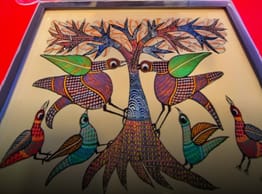
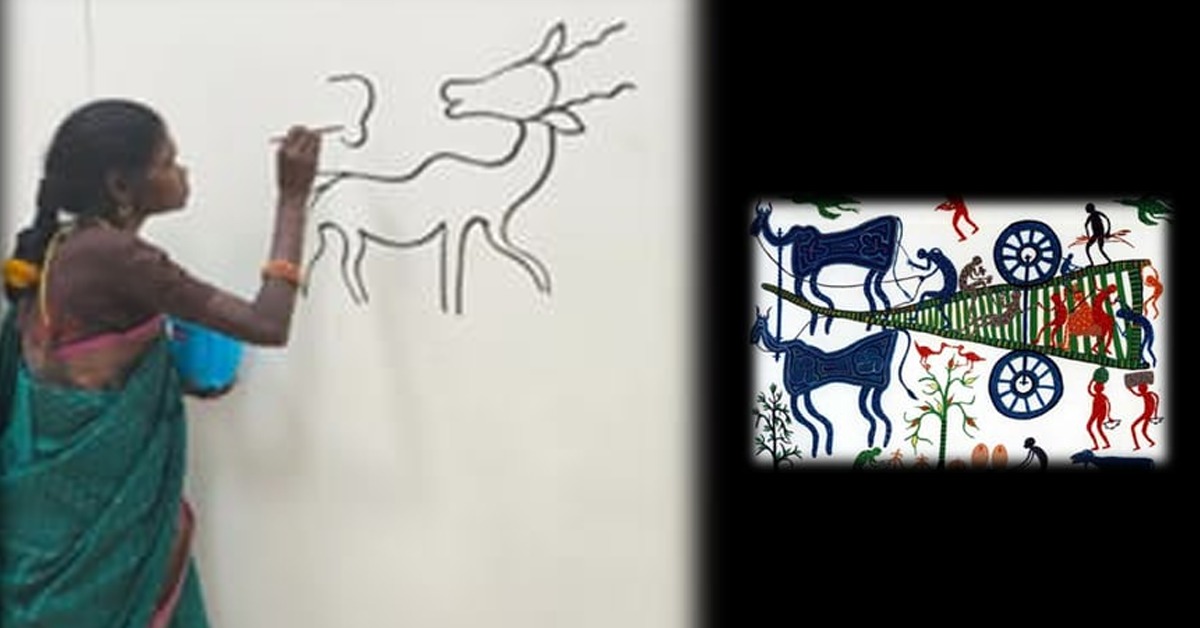
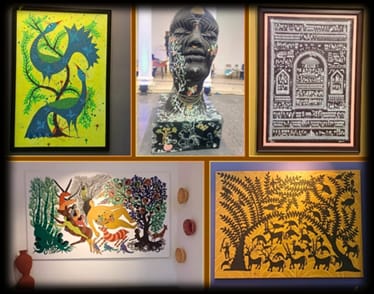
New Delhi: Between 3rd and 13th March 2026, the grounds of Travancore Palace in New Delhi came alive with creative energy filled with artists at work, visitors discovering tribal traditions, and the subtle scent of natural pigments in use. This was the Tribes Art Fest 2026, a national cultural event organised by the Ministry of Tribal Affairs, Government of India, that brought more than 75 tribal artists and over 1,000 artworks under one roof, representing more than 30 distinct tribal art traditions from across the country. Organised in collaboration with the National Gallery of Modern Art (NGMA) and FICCI, the festival was far more than an exhibition. The artworks illustrated tribal stories, mythology, nature, and community life, demonstrating the diversity of India’s indigenous cultural heritage. It was a platform where traditional knowledge systems meet new audiences, where artworks find buyers, and where living heritage is given the recognition it deserves.
Beyond exhibition, Tribes Art Fest included panel discussions on themes such as Tribal Art Revival & Sustainable Futures, Tribal Art in Contemporary Spaces, and Livelihoods & Market Linkages. The programme also involved participatory workshops, storytelling through tribal arts, illustrated talks and live demonstrations. Over 100 tribal students pursuing art from across India were provided curated walkthroughs, mentorship sessions with senior tribal artists, and exposure to live creative processes. The Tribes Art Fest 2026 brought together master artists from across India, each carrying forward traditions that predate modern India by centuries.
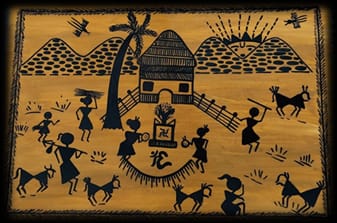
Every artwork on display carried more than aesthetic value—it carried a community’s way of seeing the world, its relationship with nature, its moral stories, and its memory. These are not relics. They are living, evolving traditions, and the artists who practice them have made clear that they do not intend to let them fade.