New Delhi: India’s cultural heritage and linguistic diversity shape its social identity and shared knowledge systems. From manuscripts, monuments, performing arts and crafts to oral traditions, folklore and indigenous knowledge, culture in India is created and passed on through many languages, scripts and spoken forms.
According to Census 2011, India’s linguistic landscape includes 22 Scheduled languages and 99 Non-Scheduled languages, spread across multiple language families, along with thousands of mother tongues and tribal languages. The Government of India has undertaken sustained institutional, educational and digital initiatives to preserve and promote our linguistic heritage and the rich traditional knowledge that it holds.
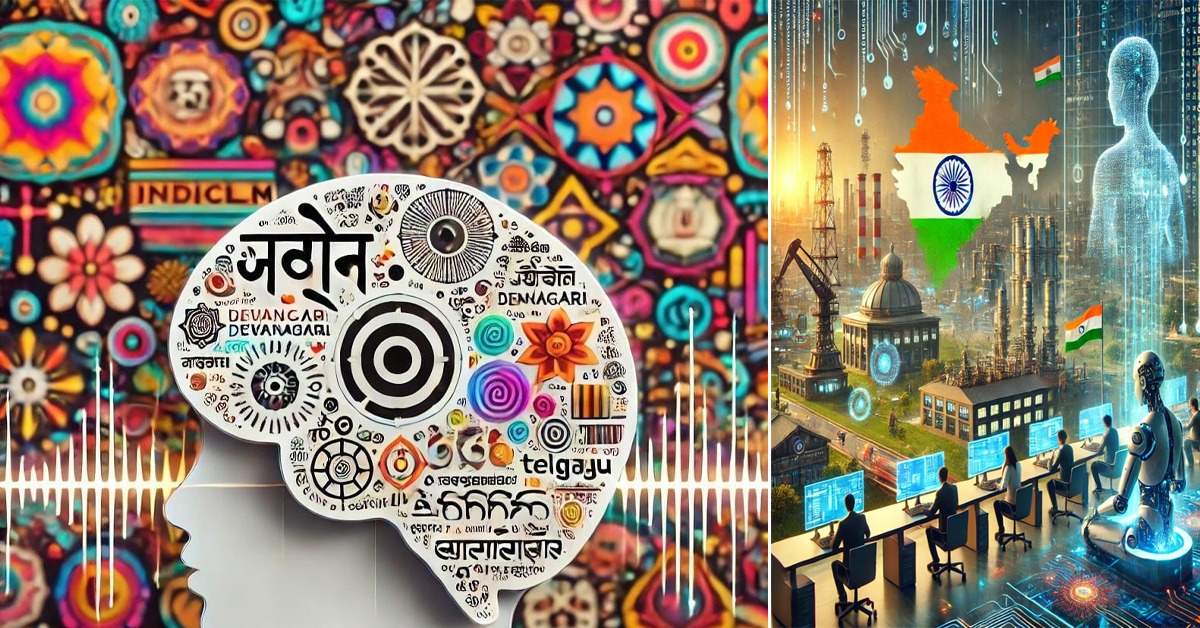
At the core of this effort is the emphasis on leveraging emerging technology including AI, to preserve cultural resources and traditional knowledge, and make it available to people in the language and formats that they are familiar and comfortable with. This calls for democratisation of technology. AI has emerged as a key enabler in this process. By supporting the digitisation and discovery of cultural assets, enabling multilingual and voice-based access, and facilitating engagement at scale, AI helps bridge gaps between heritage and people, tradition and technology. This approach reflects the vision of using AI as technology for humanity, aligned with the goal of “Welfare for All and Happiness for All”.To expand access to culture, knowledge and public services, the Government of India is taking an infrastructure- based approach.
Key pillars of this language infrastructure include: National Language Translation Mission (NLTM) – BHASHINI. Launched in 2022 under the National Language Translation Mission, BHASHINI was developed to respond to India’s wide linguistic diversity in the digital space. The initiative focuses on building language and voice capabilities directly into digital systems. This allows public platforms to function effectively across the many languages used in the country. BHASHINI addresses three key barriers together: 1) Language barrier – systems that do not understand local languages or accents 2) Digital barrier – complex interfaces that discourage use 3) Literacy barrier – dependence on reading and typing. As foundational language infrastructure, BHASHINI translates diversity into access, helping people engage with information, culture and public services in their own languages and formats— a critical step toward inclusive participation and empowerment.
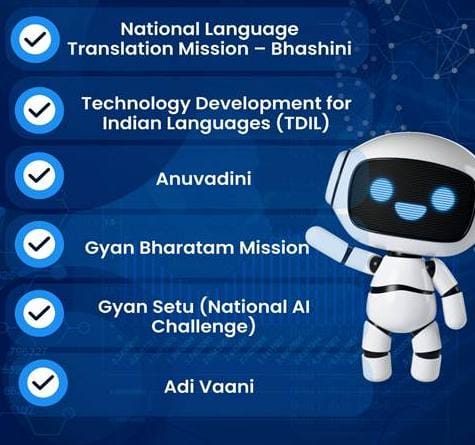
Technology Development for Indian Languages (TDIL): TDIL is a long-standing Government of India programme that laid the foundational technology base for Indian language computing, covering scripts, speech and text across multiple Indian languages. It focuses on the development and standardisation of core language technologies, including:
machine translation, optical character recognition (OCR) for Indian scripts, speech-to-text and text-to-speech systems, handwriting recognition and transliteration tools. TDIL enables practical use by creating shared linguistic resources, datasets and standards that can be reused across platforms supporting cross-lingual access, allowing users to retrieve and interact with information in their own languages ensuring consistent digital representation of Indian languages across systems and devices.
Anuvadini is an AI-based multilingual translation platform developed by the All India Council for Technical Education (AICTE) to enable large-scale translation of academic, technical and knowledge content into Indian languages. It supports practical language access through: AI-enabled translation of textbooks, reference material and learning resources, Multimodal capabilities, including text, document and speech-based translation,Integration with national repositories such as e-KUMBH, enabling access to translated content at scale.
Gyan Bharatam Mission is national mission for the survey, documentation, digitisation and dissemination of India’s manuscript heritage and traditional knowledge systems, including creation of a National Digital Repository. As AI improves access to culture, language and knowledge, the next step is to turn this access into economic opportunity and social empowerment. This is especially important for India’s cultural and creative sectors, where livelihoods depend on traditional skills, local knowledge and community-based practices. Artisans, craftspeople and cultural practitioners make up a large part of India’s informal and creative economy. When designed to be inclusive and sensitive to local context, AI can support these livelihoods by improving visibility, productivity, skills and participation in digital markets while preserving cultural identity.
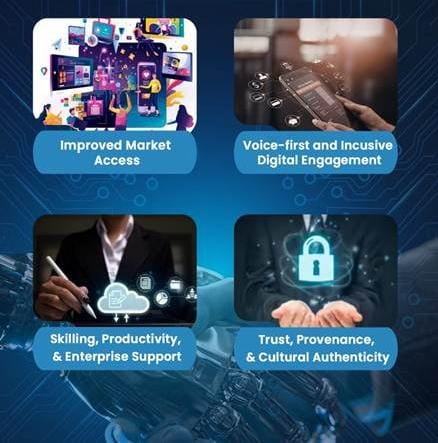
These efforts will position AI not merely as a technological tool, but as a public good that reflects India’s cultural and linguistic diversity. This human-centred approach reinforces the idea of technology for humanity— AI that listens, understands and responds to people’s lived realities. By aligning AI deployment with inclusion, participation and opportunity, India can ensure that its cultural heritage and creative communities continue to remain active contributors to a digitally empowered and socially inclusive future.