


Writer, Social Worker
In Kolkata, history doesn’t sit quietly in the past. It walks beside you. It shows up in crumbling facades, shaded corridors, old balconies, and buildings you pass every day without even realizing how much they’ve seen. On January 23, 2026, that living relationship between time and place found a new expression with the launch of Calendar 2026 by P&C, created in collaboration with the Kolkata Society for Cultural Heritage.
This was not just the unveiling of another calendar. It was the introduction of a cultural keepsake—one that turns the simple act of checking dates into a daily encounter with Kolkata’s architectural soul.The launch brought together voices from different worlds, much like the calendar itself. Dr. Andrew Fleming, British Deputy High Commissioner for East and Northeast India, attended as the chief guest, offering an international lens on a deeply local story. Sourav Mukherjee, founder of the Kolkata Society for Cultural Heritage, stood at the heart of the project, representing years of dedication to protecting and celebrating the city’s built legacy. And Bilquis Parvin—entrepreneur, fashion influencer, and the face of Calendar 2026—embodied the calendar’s contemporary spirit, proving that heritage and modern sensibility don’t have to exist apart.
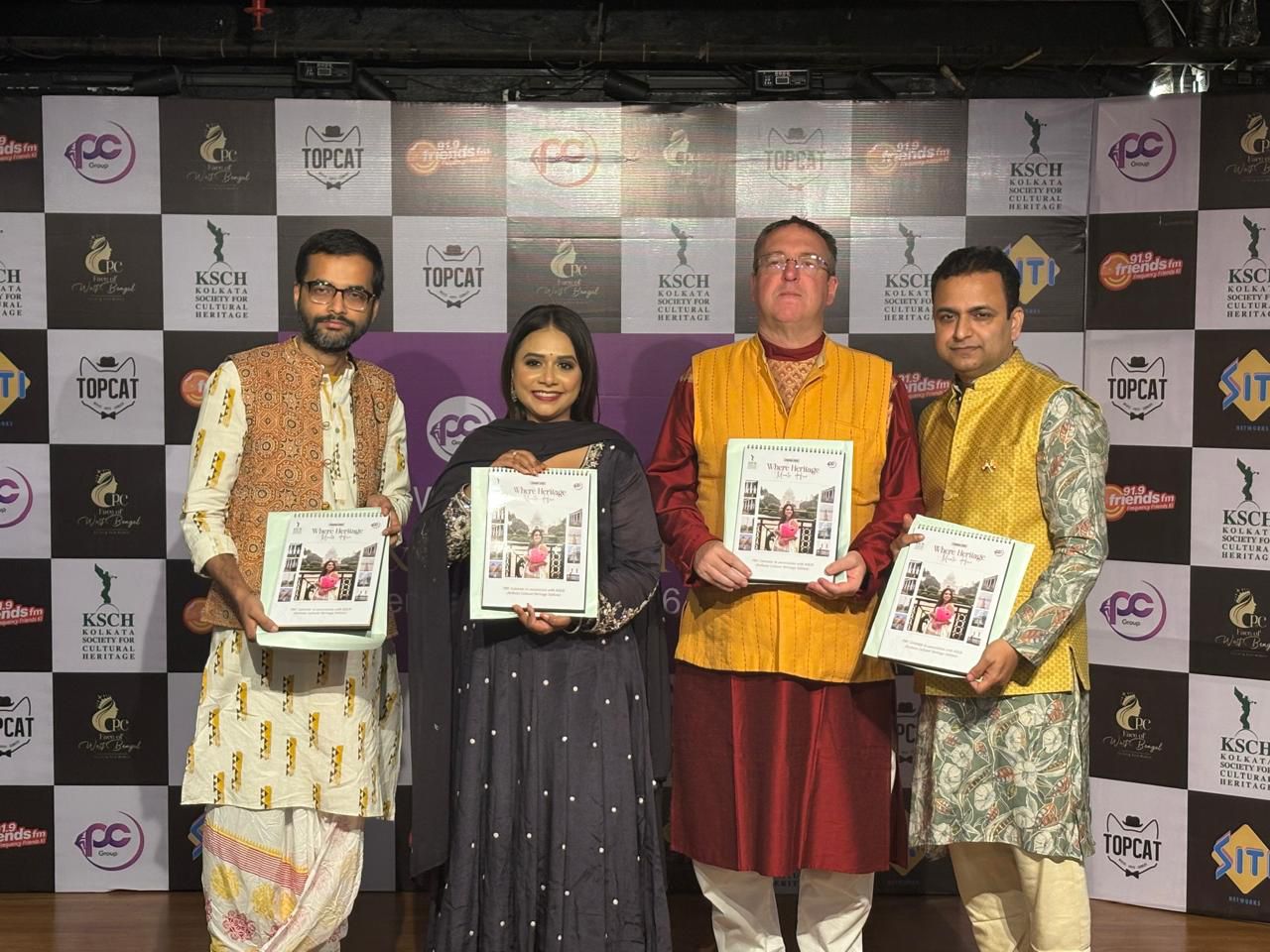
Kolkata has always been shaped by its buildings. Colonial institutions, aging mansions, cultural landmarks, and modest homes together tell stories of ambition, struggle, creativity, and change. Yet familiarity often dulls our attention. We hurry past these structures, rarely pausing to notice their details or remember what they represent. Calendar 2026 gently interrupts that habit. It asks you to slow down and look again.Each month features a carefully chosen architectural landmark, photographed with warmth and honesty. These are not glossy, postcard-perfect images. Instead, they capture mood—light falling across old walls, textures shaped by time, quiet corners that feel almost personal. The buildings don’t feel frozen in history; they feel present, observant, alive.
Youth will play a major role in achieving Viksit Bharat goal: Raksha Mantri
Speaking at the launch, Dr. Fleming reflected on how meaningful it was to see heritage preserved not only through conservation, but through creative engagement. Projects like this, he noted, allow history to enter contemporary life—bridging art, fashion, and cultural memory, and helping Kolkata speak to the world while staying true to itself.
That balance is what gives the calendar its quiet strength. In an age ruled by screens and notifications, choosing a physical calendar feels almost rebellious. But there is power in that choice. Turning a page by hand, marking dates with a pen, noticing an image again and again—these small rituals bring a sense of slowness that mirrors how we truly experience architecture. The calendar doesn’t demand attention. It waits for it.
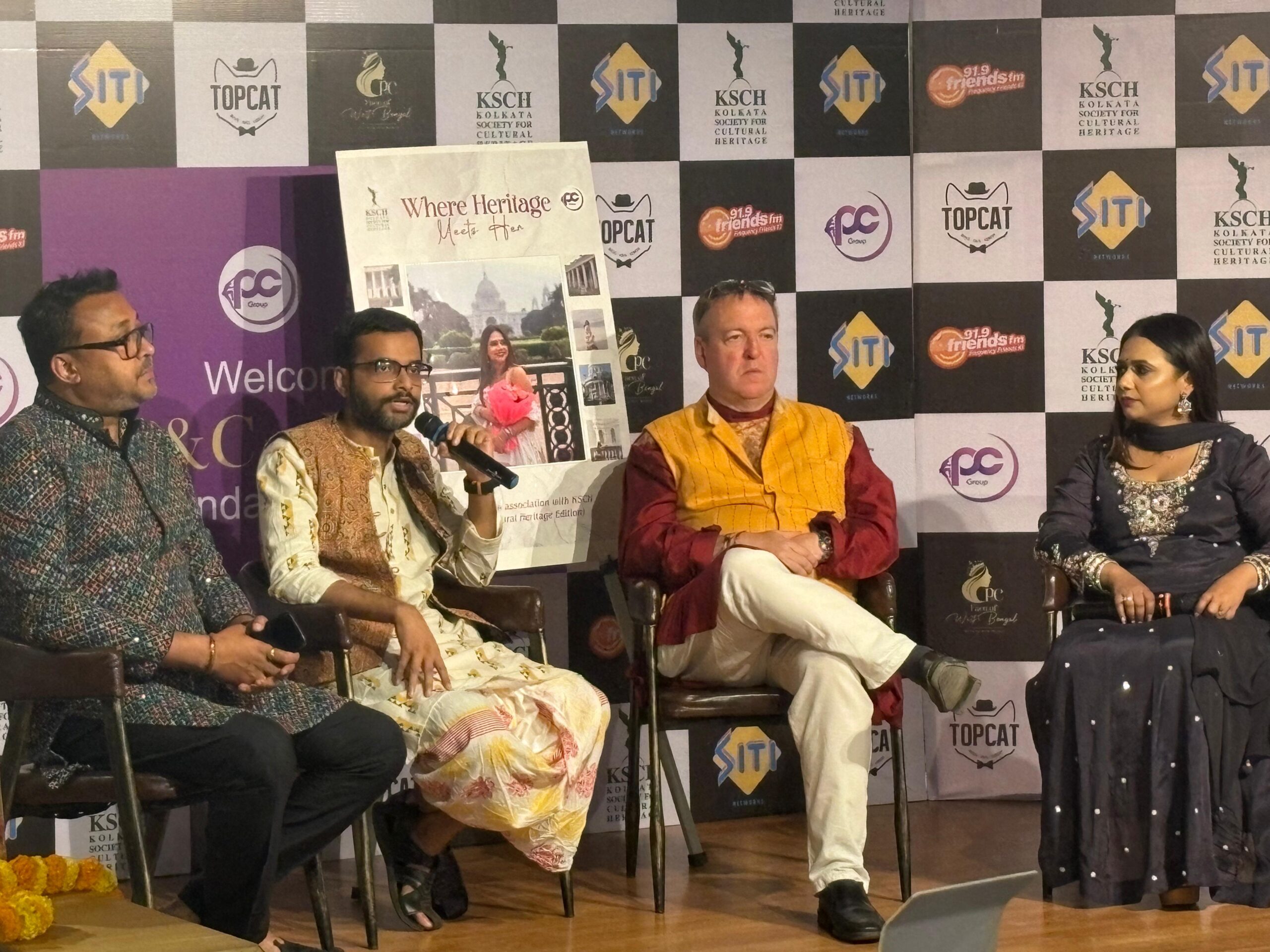
Sourav Mukherjee spoke about this intentional slowness, describing the calendar as something meant to be lived with, not rushed through. Carefully curated and thoughtfully designed, it was created not just for one year, but as a keepsake—something people might hold on to long after December 2026 has passed.The design supports that idea beautifully. Clean layouts, restrained typography, and just enough text to offer context without overwhelming the viewer. The visuals lead, while the words gently guide. It’s welcoming rather than instructive, emotional rather than academic.
Bilquis Parvin’s presence throughout the calendar adds another layer of meaning. Styled against historic backdrops, she doesn’t compete with the architecture—she converses with it. Her role quietly reinforces the idea that heritage isn’t distant or outdated. It continues to inspire how we dress, create, and express ourselves today. At the launch, she shared her belief that even in a digital-first world, this calendar would hold lasting value—for collectors, admirers, and anyone who feels connected to Kolkata.
One of the most striking choices is the calendar’s honesty. The photographs don’t hide age or imperfections. Peeling paint, worn stone, and timeworn details are all allowed to remain. There’s no attempt to romanticize decay, only to respect endurance. These buildings have survived, adapted, and stood their ground—and that resilience is what gives them their quiet authority.
As the months unfold, the calendar begins to tell a subtle story. Public buildings once tied to colonial power now function as shared civic spaces. Homes hint at private lives and creative legacies. Religious and cultural structures reflect Kolkata’s long tradition of coexistence and exchange. It’s not a complete history, but a deeply evocative one—leaving space for personal memories and interpretations.
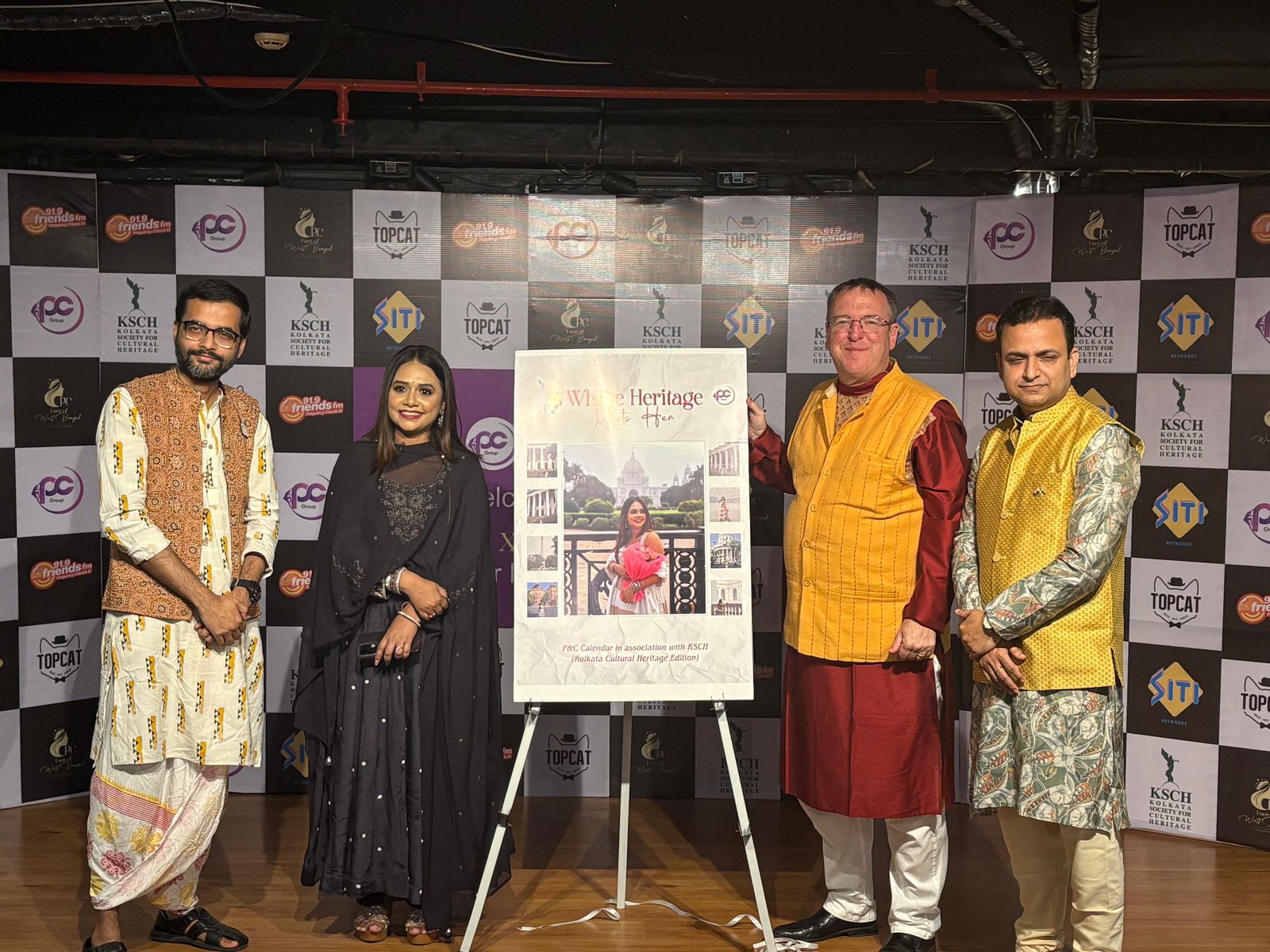
What truly sets Calendar 2026 apart is how seamlessly it fits into everyday life. Unlike exhibitions or books that require dedicated time, a calendar becomes part of your routine. You glance at it daily. Over time, admiration turns into familiarity, and familiarity into connection. A building you see once may impress you. A building you live with for a month becomes part of you.
In a city constantly negotiating between preservation and progress, the calendar doesn’t argue or preach. Instead, it gently reminds us that remembering doesn’t mean resisting change. Awareness can enrich growth rather than stand in its way.
Perhaps the most telling moment of the launch came not from the speeches, but from the crowd. Guests lingered over the pages, pointing out familiar places, sharing stories, recalling moments tied to the buildings on display. The calendar had already begun doing what it was meant to do—spark memory, conversation, and connection.
Through the collaboration of P&C and the Kolkata Society for Cultural Heritage, Calendar 2026 emerges as something quietly powerful. Practical yet poetic. Contemporary yet deeply rooted. In a culture of constant replacement, it invites us to keep, to revisit, to remember.Long after the year ends, its pages will likely remain—framed, stored, or returned to during reflective moments. For some, it will mark a specific moment in Kolkata’s cultural life. For others, it may be the beginning of a deeper relationship with the city’s architectural stories.
At its heart, Calendar 2026 asks a simple question: How do we live with our past? Not as something distant or overwhelming, but as a companion—present, patient, and woven into everyday life. As the launch evening drew to a close and Kolkata returned to its familiar rhythm of trams, traffic, and conversation, the calendar remained quietly still. Its pages waited to be turned. In a city where history can feel vast and heavy, this modest object offered something rare—a way to hold time gently, one month at a time, and to see Kolkata not just as it was, but as it continues to be.