
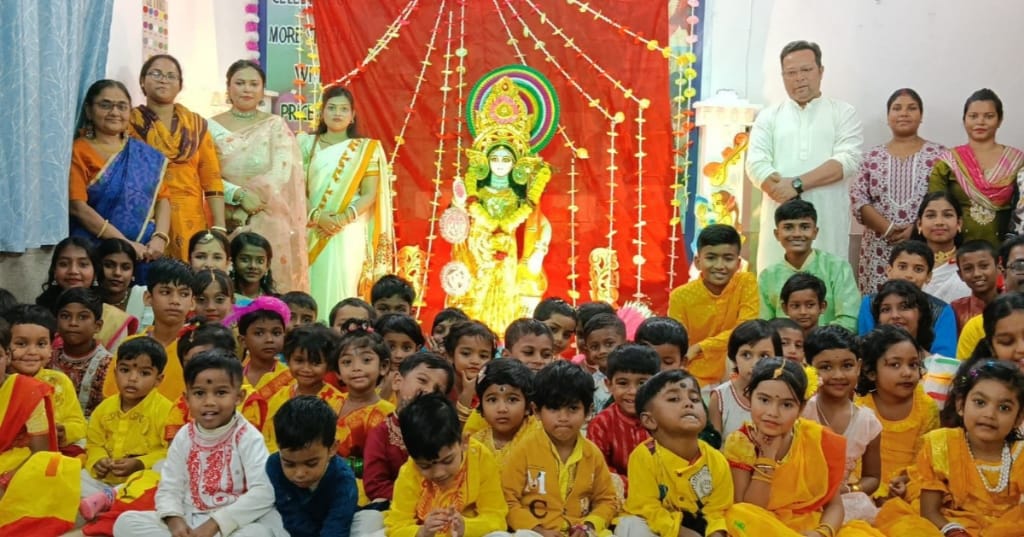

Writer, Social Worker
The morning of Saraswati Puja began without fanfare. Winter sunlight filtered through narrow neighborhood lanes, brushing rooftops, shop shutters, and modest homes alike. Inside a small community learning center run by the Shoishob Foundation, preparations were already underway—unhurried, familiar, and purposeful.
The space was simple and well used. Shelves lined the walls, holding books, notebooks, and learning materials softened by frequent handling. Educational charts and children’s drawings shared the walls. At the front of the room, a low table draped in a clean white cloth held flowers, incense, and a modest idol of Goddess Saraswati. There was no sense of excess—only intention.
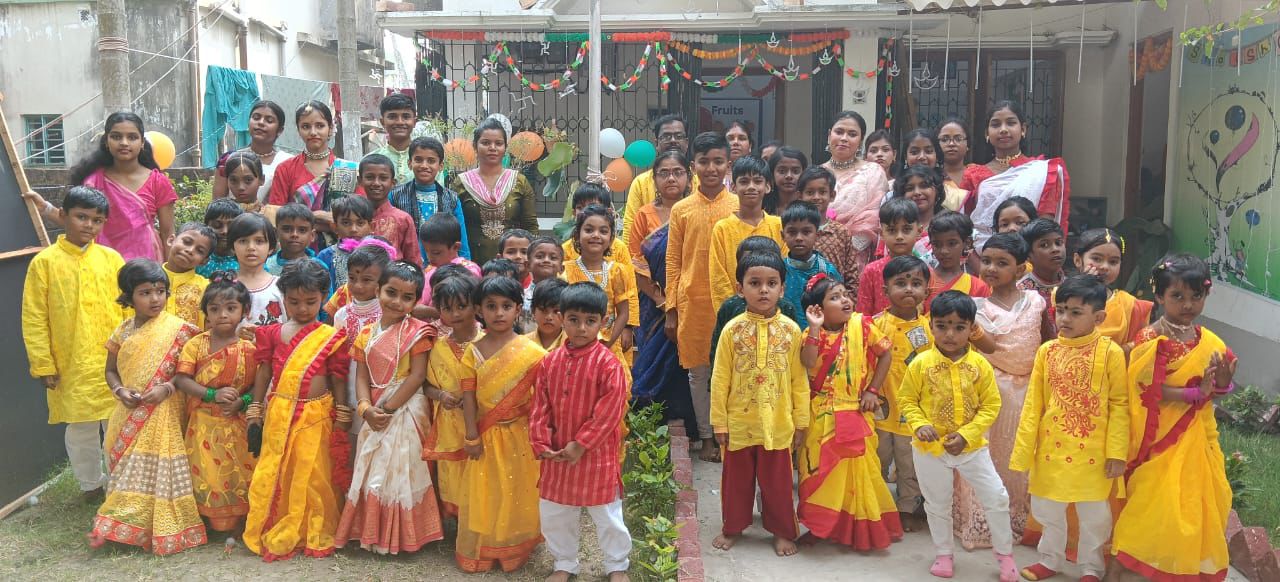
Children arrived in small groups, each carrying something personal: a textbook, a slate, a notebook, or a drawing pad. Without instruction, they placed their belongings near the altar. Over time, this quiet ritual had become instinctive. For many of them, this was one of the rare occasions when learning materials were treated with reverence and care.
Rina, a regular at the center, arrived early. She removed her sandals at the door and paused to take in the room. In her hands was a notebook wrapped carefully in newspaper to protect it from dust and wear. She placed it gently alongside the others and stepped back without a word.
Groundwater Management for India’s Water Future
The puja was conducted simply. Soft chants filled the room, led by a volunteer and followed unevenly by the children. Some recited, some listened, and others observed in silence. Participation varied, but there was no pressure—only an emphasis on presence and respect. The atmosphere remained calm and attentive.
After the prayers, a few children shared short presentations. Rina recited a poem she had prepared, speaking of learning not as achievement, but as effort, patience, and continuity. Another child, Disha, displayed a drawing of a classroom. When asked about it, she explained that it represented the kind of school she hoped to attend one day. Her response was brief and matter-of-fact, requiring no elaboration.
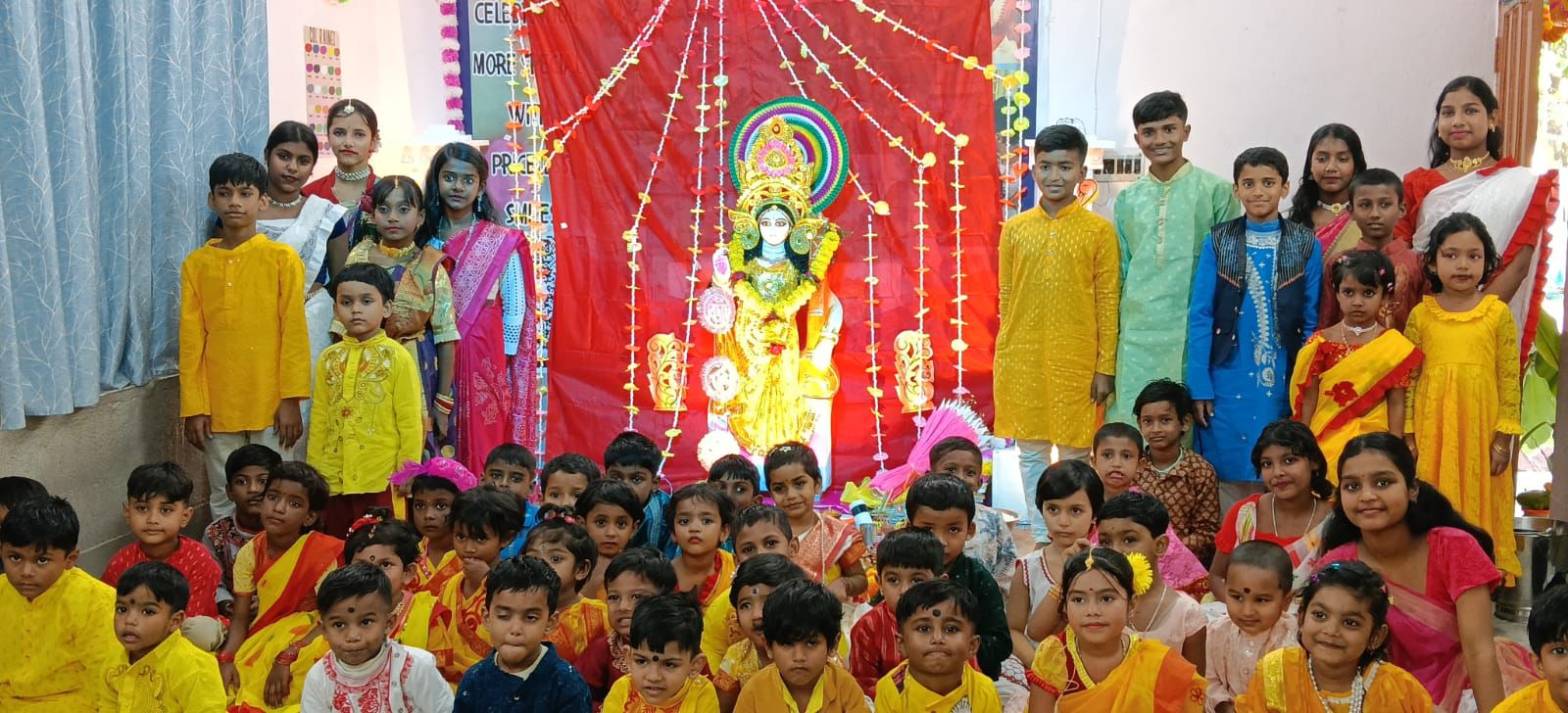
Later, the children sat together for prasad, sharing food and quiet conversation. The mood was relaxed and informal. Speaking on the occasion, Mr. Ambarish Saha, Founder and Chairman of the Shoishob Foundation, said, “Saraswati Puja brings together knowledge, creativity, and emotional connection. By celebrating Goddess Saraswati, we help children associate learning with joy and dignity, especially those who face daily hardships. It creates a positive environment where education feels meaningful and accessible.”
As the afternoon progressed, the center slowly returned to its everyday rhythm. Flowers wilted, incense burned down, and materials were put away. The idol would be immersed the following day, in keeping with tradition. Before leaving, the children were asked to take their books home. Some hesitated, worried about damaging them. They were gently reminded that learning involves use—and that wear is a natural sign of ownership.
The Saraswati Puja was never intended to produce immediate change. Knowledge cannot be inherited in a single day. What the celebration offered instead was something quieter yet enduring—self-belief, continuity, dignity, and inclusion. By linking education with cultural practice, learning became familiar rather than distant, respected rather than imposed.As evening approaches the next day, decorations will be removed, and the Goddess of learning will be immersed, as tradition guides. Yet what remains does not vanish with the water. When students return the following day, books in hand and curiosity intact, the spirit of the puja continues. Within the classrooms of Shoishob, these small, steady acts of learning ignite hope—shaping futures and inspiring others in ways that may only be fully understood in the years to come.