

Writer, Social Worker
In an age of instant gratification, where effort is often outsourced and patience feels optional, the art of making a Christmas cake is slowly losing its sheen. Cakes today arrive at doorsteps within minutes—perfectly frosted, neatly boxed, and stripped of the long wait that once defined them. What has quietly disappeared is not the cake itself, but the time it once demanded. There was a time when cakes were not purchased; they were prepared, anticipated, and earned through days and weeks of careful work.
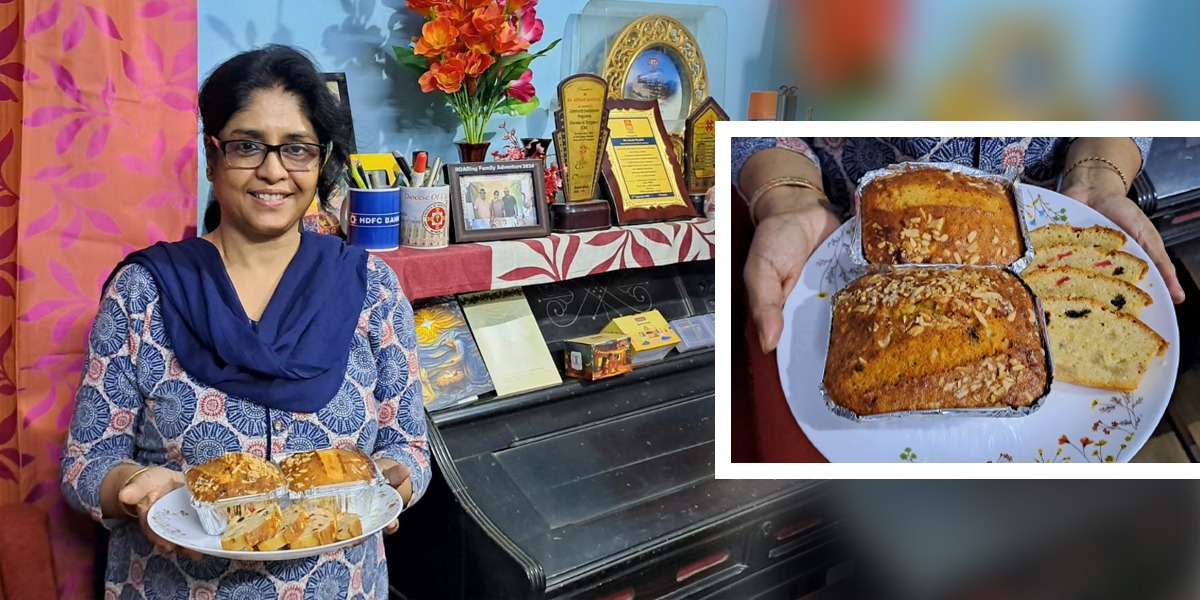
Indrani was only 24 when she first encountered this slower rhythm of celebration. Newly married to Arnab, she was still adjusting to her new home when December arrived. Arnab’s profession often took him away on field trips, leaving Indrani at home during the weeks leading up to Christmas. While many young brides might have chosen rest or routine, Indrani found herself drawn into a tradition that had quietly shaped the Mandal household for generations.
Her father-in-law, the late Arun Mandal, had already begun preparations. For him, Christmas did not start on the 25th of December. It began weeks earlier with jars, trays, and ingredients laid out with intention. Without formal instruction, Indrani rolled up her sleeves and joined him, unaware that she was stepping into a legacy built on patience rather than precision. Fruits were chopped slowly and evenly. Cashews and kismis were sun-dried, turned gently each day to ensure they dried just right. Jars of fruits soaked in rum were stirred daily, their aroma growing richer as the days passed. There was no written recipe to consult. Arun Mandal believed that the essence of cake-making could not be documented. It had to be observed, absorbed, and felt. Through this process, Indrani learnt that Christmas was not merely a date on the calendar—it was a flavour of togetherness, a season built on shared labour and quiet anticipation.
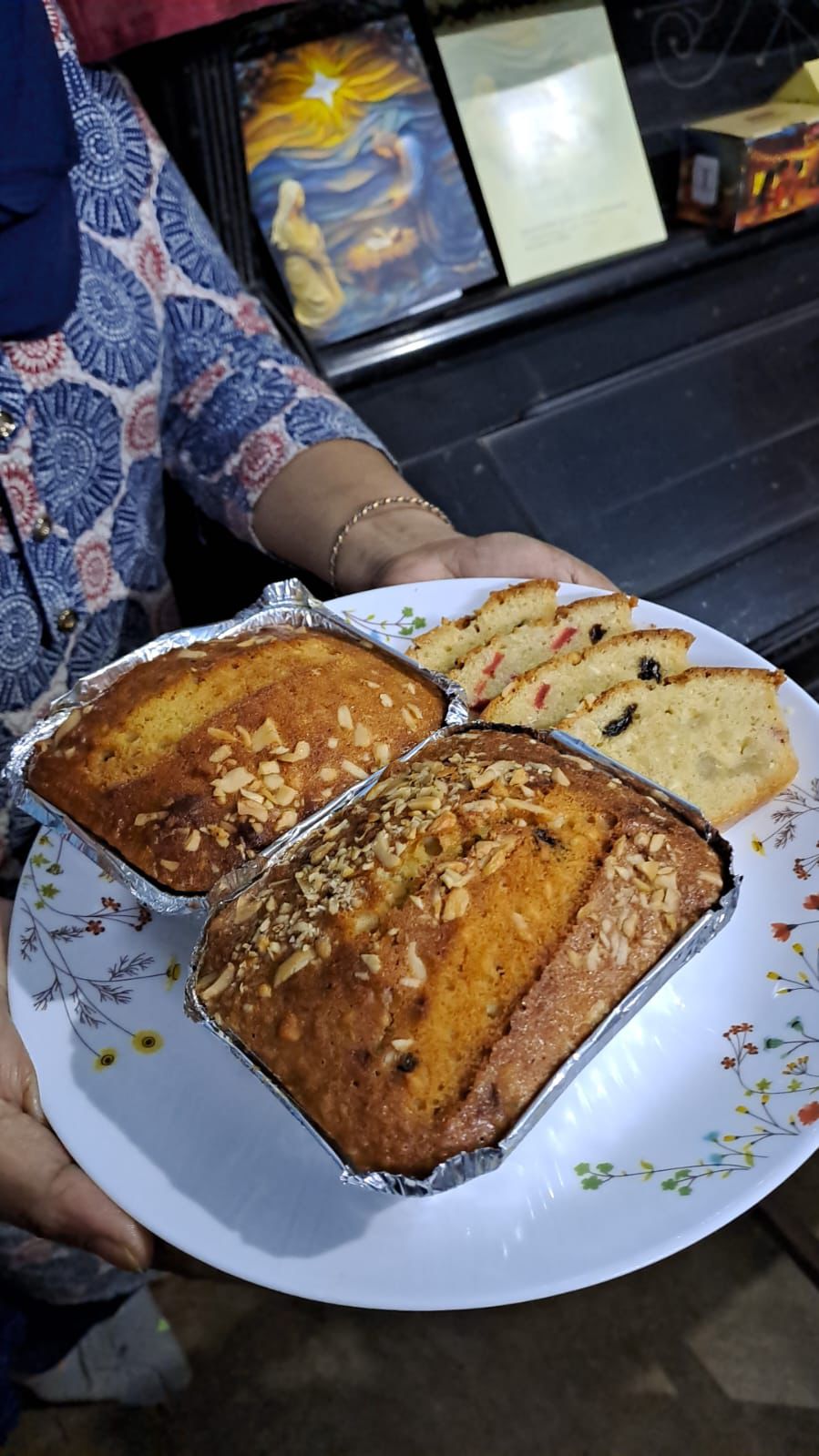
Among Bengali Christian families, Christmas cake recipes are closely guarded secrets. Each household believes its version is distinct. Some add nutmeg, others swear by cinnamon or cloves. Many incorporate a touch of garam masala, grounding the cake firmly in local culture. These cakes are neither Western imitations nor commercial products; they are deeply Indian, shaped by memory and place.
The Mandal family had its own unmistakable signature. Amul butter and Jharna ghee formed the heart of their recipe. These were not exotic ingredients but everyday staples that carried familiarity and warmth. The result was a cake that tasted unmistakably like home—rich, dense, and honest.
Once the batter was ready, the ritual moved beyond the home. The cakes were baked at the neighbourhood bakery, a practice that demanded both effort and endurance. Heavy tins were carried through narrow lanes, queues stretched for hours, and conversations flowed easily among neighbours waiting for their turn. There was no impatience, no sense of inconvenience. Waiting together was part of the experience. An entire day disappeared into preparation, baking, and collection, and yet the time never felt wasted.
Santa on Wheels: Delivering Mobility, Dignity, and Independence
These cakes were never meant to be consumed within the household alone. Wrapped carefully, they were sent out as gifts to friends, colleagues, neighbours, and extended family, cutting across religious and social boundaries. To receive a homemade Christmas cake was to be reminded that someone had thought of you weeks in advance, investing time and care in the gesture.
As years passed, this rhythm began to weaken. Modern kitchens, electric ovens, ready-made mixes, and instant delivery services transformed cake-making into a quick transaction. Fruit soaking became optional, patience negotiable. Convenience replaced craft. What society gained was speed. What it lost was story.
Arun Mandal never spoke about preserving tradition; he simply lived it. Even as age slowed him down, he refused shortcuts. He measured ingredients by instinct, adjusted flavours by memory, and believed that rushing the process diluted not just taste but meaning. After his passing, December felt quieter in the Mandal household. Though the jars and trays remained, grief momentarily interrupted the ritual.
Yet traditions rooted in love rarely disappear. They adapt.Today, Indrani’s son Arijit is learning the art. Guided by his mother and stories of his grandfather, he is discovering that cake-making is not about perfection or presentation. It is about patience. In a world that teaches children to expect instant results, Arijit is learning to wait—for flavours to deepen, for effort to show, and for time to perform its quiet magic.
Indrani’s story echoes across many homes. In another household, Chandrani Sen Dasgupta, a housewife, continues a similar tradition inherited from her mother. As a child, Chandrani watched her mother soak fruits weeks in advance, dry nuts under the winter sun, and guard the family recipe with care. Today, she repeats the same rituals in her own kitchen. For Chandrani, baking a Christmas cake is an act of remembrance. Each step reconnects her to her mother, ensuring that memory survives not in photographs, but in flavour.
For Sarbani Bhattacharya Mukherjee, the challenge is different. A working woman with a demanding schedule, she refuses to let modern pressures erase tradition. Christmas holidays become her window of time. She plans meticulously, soaks fruits well in advance, and uses her precious days off to bake cakes that echo those made in her childhood. For Sarbani, cake-making is an assertion—that work, deadlines, and professional identity need not erase inherited rituals. It is her way of reclaiming slowness in a fast-paced life.
In homes like these, cake-making is not nostalgic indulgence. It is quiet resistance. It pushes back against a culture that celebrates immediacy and efficiency above all else. It reminds younger generations that some things gain value only when time is allowed to shape them.
Today, Christmas in many households has been compressed into a single day. Decorations are purchased, cakes are ordered, celebrations completed quickly. The long build-up—the weeks of preparation and anticipation—has quietly disappeared. Along with it, a certain depth of experience.
Cake-making is losing its sheen not because people no longer enjoy cakes, but because modern life rarely accommodates patience. Yet in households where jars still line shelves in early December and aromas deepen slowly, the tradition survives. Not loudly, not defiantly, but steadily.
As December returns each year, families like those of Indrani, Chandrani, and Sarbani continue to measure Christmas differently. Not in discounts or delivery timelines, but in effort, memory, and shared time. Because some things are worth waiting for. And like the perfect Christmas cake, their magic lies not in speed, but in patience.