
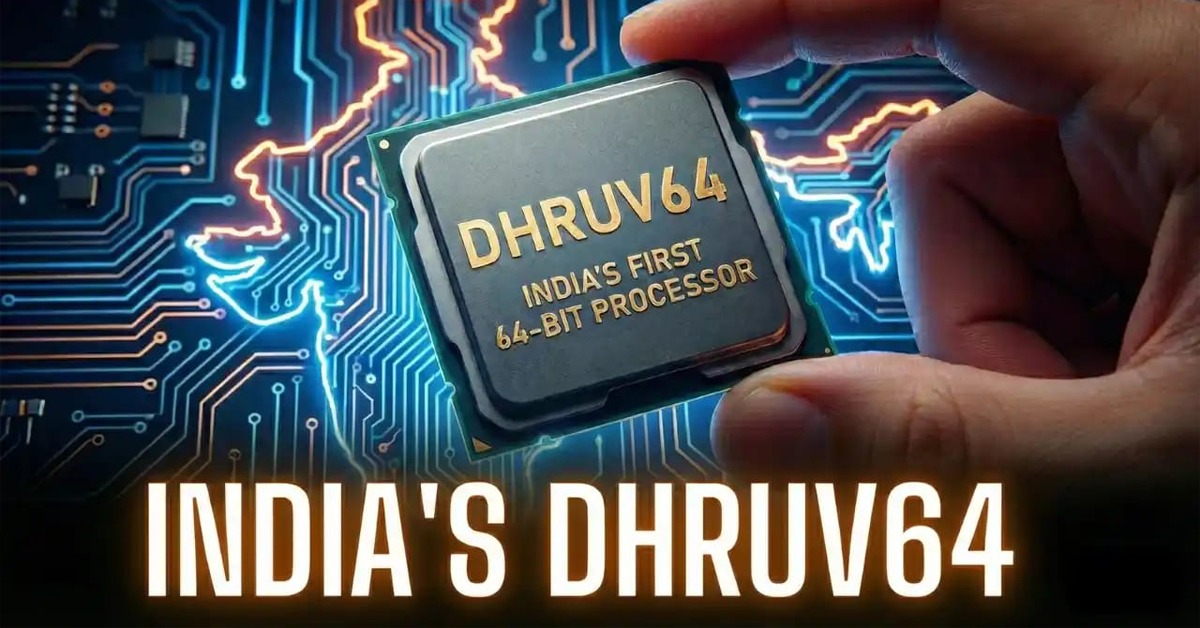
New Delhi: India has achieved a significant milestone in its semiconductor journey with the launch of DHRUV64. It is a fully indigenous microprocessor developed by the Centre for Development of Advanced Computing (C-DAC) under the Microprocessor Development Programme (MDP). DHRUV64 provides the nation a reliable, homegrown processor technology. It is capable of supporting strategic and commercial applications. It marks a major advancement in India’s pursuit of self-reliance in advanced chip design.
Advancement of Nuclear Energy for Transforming India
Microprocessors are the brains of modern electronic devices such as mobiles, computers, automobiles, medical equipment, defence systems and satellites. For India, building and owning such core technologies is important to reduce reliance on foreign suppliers and support the growing electronics and digital economy.
DHRUV64 is built with modern architectural features. It delivers higher efficiency, enhanced multitasking capability and improved reliability. Its advanced design enables seamless integration with a wide range of external hardware systems. The processor’s modern fabrication leverages technologies used for high-performance chips. This makes DHRUV64 suitable for sectors such as 5G infrastructure, automotive systems, consumer electronics, industrial automation and the Internet of Things (IoT).
DHRUV64 marks a major milestone in India’s efforts to build a secure and self-reliant semiconductor ecosystem. It strengthens the nation’s indigenous capability in advanced processor development. It supports the critical digital infrastructure and hence, reduces the long-term dependence on imported microprocessors.
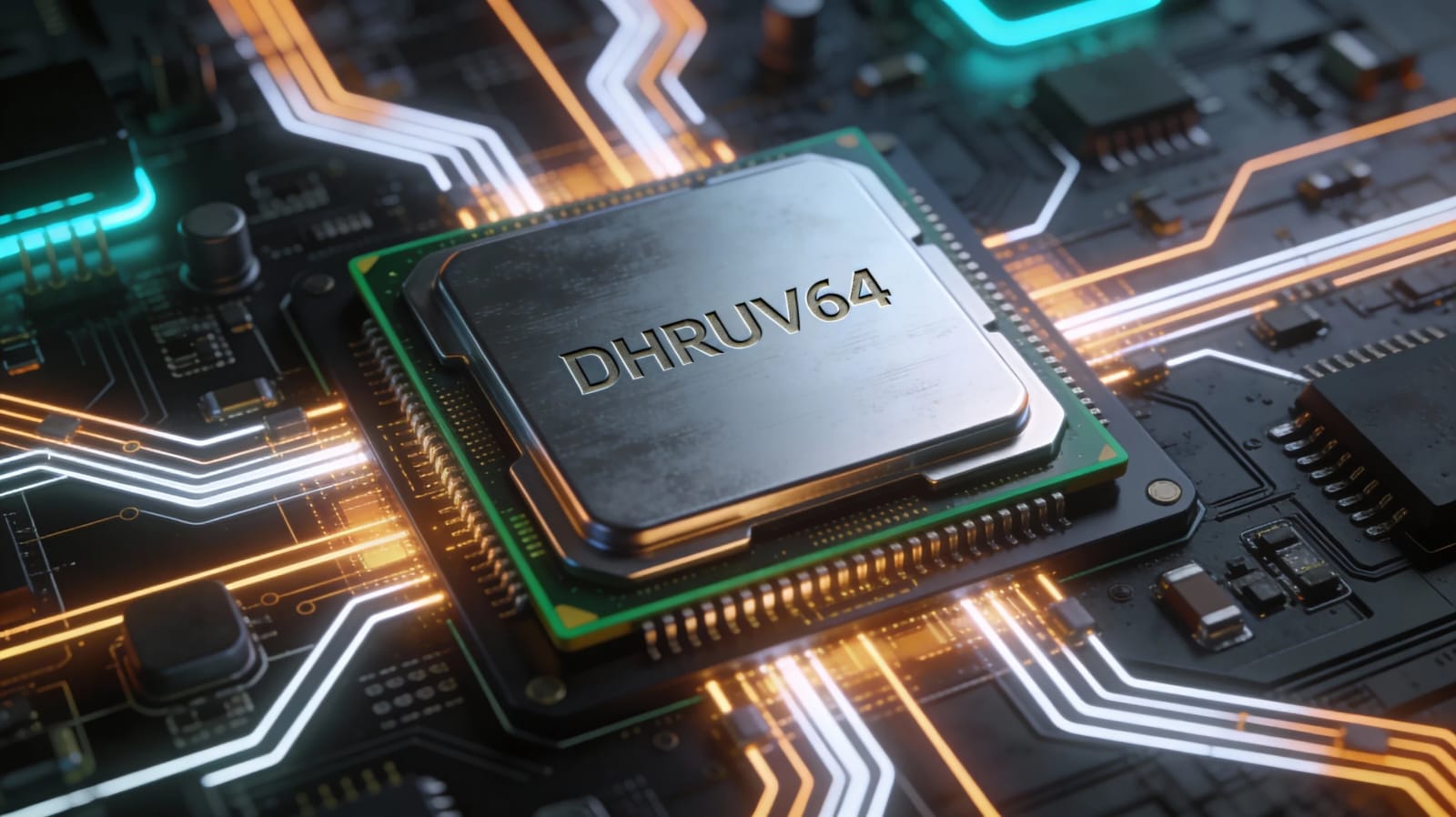
India consumes around 20% of all the microprocessors manufactured globally. The development of DHRUV64 provides India’s large talent base with a fully modern processor platform for advancement of semiconductor ecosystem in India. Before DHRUV64, India had already begun expanding its indigenous microprocessor development ecosystem in recent years. Key examples include:
SHAKTI (2018, IIT Madras): Designed for strategic, space, and defence applications;
AJIT (2018, IIT Bombay): A microprocessor for industrial and robotics applications;
VIKRAM (2025, ISRO–SCL): A processor developed for space applications such as navigation, guidance, and mission operations; engineered to withstand extreme space conditions;
THEJAS64 (2025, C-DAC): Designed for industrial automation.
Developing indigenous processors such as the SHAKTI, AJIT, VIKRAM, THEJAS, and now the DHRUV64 is strategically significant. These processors drive the creation of an Indian processor ecosystem.