
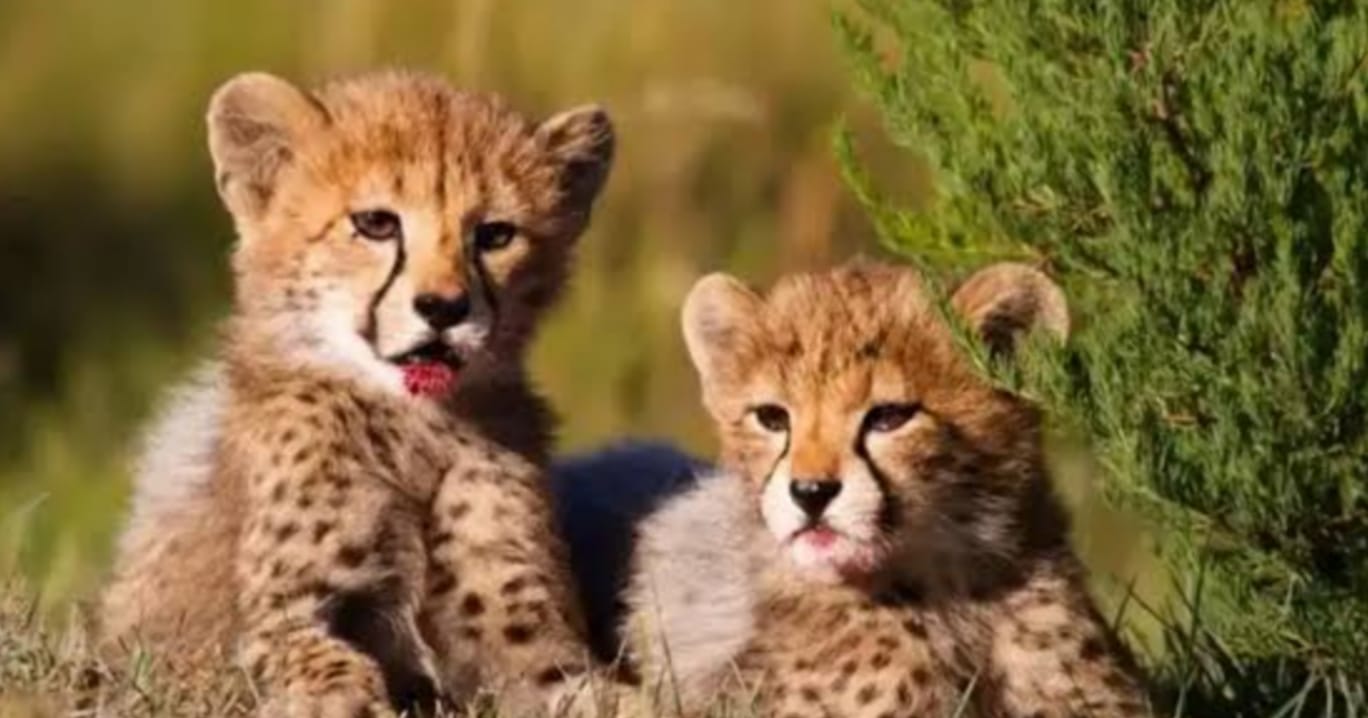
New Delhi: It is India’s historic wildlife comeback story, reviving a species extinct since 1952 through the world’s first inter-continental large carnivore translocation.
Key Highlights:
1) 20 cheetahs translocated from Namibia & South Africa (2022–23); PM Modi released the first eight on 17 Sept 2022.
2) Mukhi milestone: First India born cheetah cub (2023) becomes a mother to 5 healthy cubs in 2025.
3) 30 cheetahs now in Kuno National Park— 11 founder animals + 19 India-born.
4) Target:Self-sustaining 60–70 cheetah metapopulation across 17,000 km² by 2032.
5) Community impact: 450+ Cheetah Mitras, 380 jobs & eco-tourism benefits for local villages.
6) Global conservation leadership: India anchors the International Big Cat Alliance (IBCA) to protect seven big cat species.
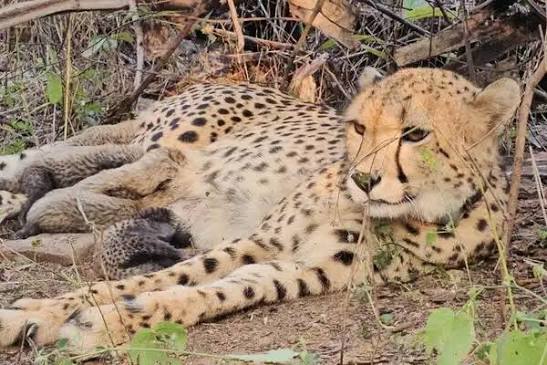
Under the Ministry of Environment, Forest and Climate Change (MoEFCC) and spearheaded by the National Tiger Conservation Authority (NTCA), Project Cheetah embodies India’s unwavering commitment to biodiversity restoration. Drawing from the 2013 Action Plan and Supreme Court directives, it seeks to reintroduce the Asiatic cheetah (Acinonyx jubatus, declared extinct in India in 1952) as a flagship species, fostering ecosystem health across vast landscapes. As of December 2025, Kuno supports a population of 30 cheetahs. With a further eight cheetahs arriving in India from Botswana, the project continues to stand as a beacon of hope, earning international recognition for its scientific rigour and diplomatic finesse.