
Social Entrepreneur, Consultative Member of the United Nations ECOSOC, and Advisory Member of AACCI & AIFOD and Peace Ambassador of African Nations
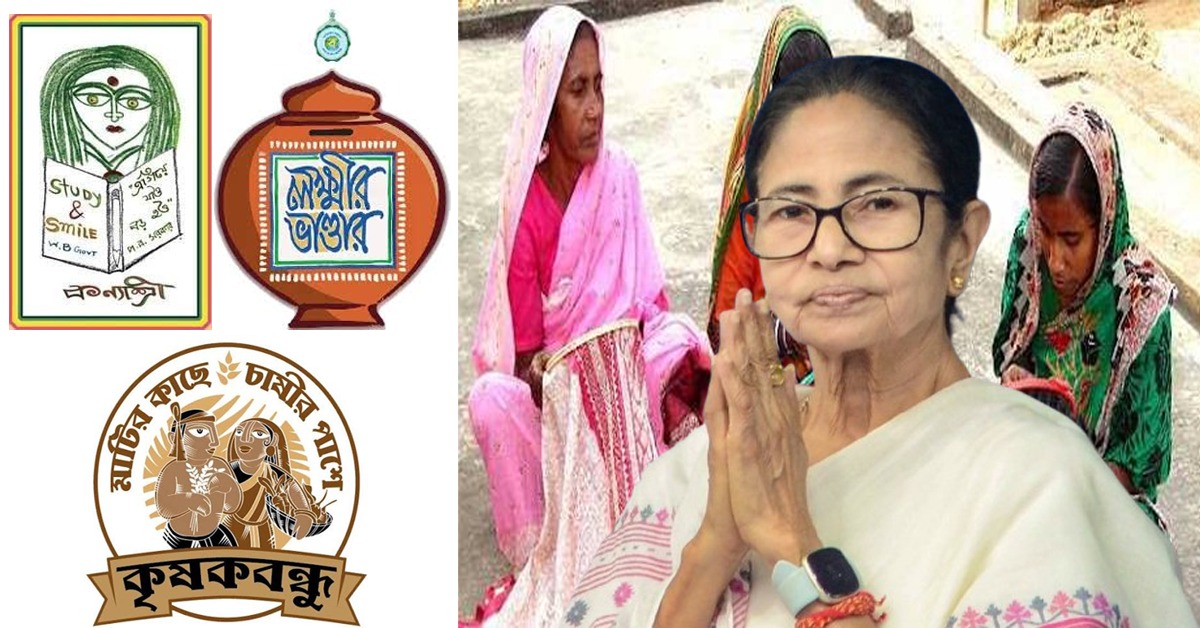
The alternative economic policy pursued by the Mamata Banerjee government through a number of social schemes alongside attracting employment- driven investment has resulted in nothing less than a miracle on the economic front. The little over 14 years of the regime has witnessed a phenomenal six-fold jump in the state’s own revenue from just ₹21,000 crore in 2010–11 to an estimated ₹1.12 lakh crore in 2025–26, which was ₹99,863 crore in 2024–25. The gross state domestic product during this period too has grown almost six times—from ₹3.5 lakh crore in 2010–11 to an estimated ₹19 lakh crore by the end of this financial year—and with a ranking in the top order (5–6). During the last fiscal also, the GDP growth of the state was higher than the national average by 0.5%. As the epithet “Rome was not built in a day” is oft-quoted, the magical progress in the economy of West Bengal was preceded by a very methodical approach. Social policies like “Lakshmir Bhandar”, “Kanyashree”, “Krishak Bandhu”, along with others, have generated vital rural demand that led to consumption and kept the economy rolling. As per experts, the marginal propensity to consume for the people these schemes are targeted at is very high, which means they have consumed what they received, thereby boosting demand and the economy almost immediately. Other major pillars of the state economy include self-help groups and the MSME sector. During the Mamata Banerjee regime, both SHGs and MSMEs have proliferated significantly.
The bank credit disbursement to self -help groups (SHG), which is dominated by women (98% women), has grown by 35 times in 13 years during Mamata Banerjee’s regime. In 2011–12, the number of self-help groups with credit linkages from banks was 93,400, and the total credit disbursed to them was ₹553 crore. From there, the number of SHGs with credit linkages has gone up to 8.5 lakh. The total amount of credit disbursed to SHGs in the state was ₹20,000 crore.
More News: rbi-new-reuters
The number of micro, small, and medium enterprises has also grown phenomenally, and they are highly employment-oriented or labour-intensive. Alongside all these Banerjee ensured some big names coming to Bengal. In IT front now the state has almost all the biggies from Infosys, TCG, Cognizant, Wipro, Tech Mahindra to others. A lot of data centres are also coming up in Bengal, as the state has a power surplus.
Bengal also boasts all the big names in the cement sector— from ACC and Ambuja to Ultratech. In the paints sector too, Bengal houses major brands like Berger Paints, Birla Opus, and Akzo (now JSW Paints)A lot of data centres are also coming up in Bengal, as the state has a power surplus.
In a nutshell, West Bengal’s alternative economic policy spearheaded by the Hon’ble Chief Minister, Mamata Banerjee has a high growth potential and will develop the financial condition of its people in the long run.